
Uncategorized
The Hidden Danger in the Dust: A Guide to Staying Safe from Hantavirus

When you’re opening up the family cabin for the summer or finally tackling that cluttered garden shed, “deadly virus” is usually the last thing on your mind. But tucked away in the quiet corners where rodents nest lies a silent threat: Hantavirus.
While rare, this respiratory illness is serious business. It’s not something you catch from a friend; it’s something you breathe in from the environment. Here is everything you need to know to keep your home and your lungs safe.
The Invisible Threat: How it Spreads
Hantavirus isn’t a “social” virus. You won’t get it from a cough or a handshake. Instead, it’s carried by specific rodents—primarily the Deer Mouse in the Western U.S.
The danger starts when rodent urine or droppings are disturbed. When you sweep a dusty garage, those viral particles become airborne. One deep breath is all it takes for the virus to enter your system.
Spotting the Signs: Not Your Average Flu
The tricky part about Hantavirus is that it starts off looking like a common case of the flu. You might feel “off” for a few days with:
- Fever and Chills: A sudden spike in temperature.
- Deep Muscle Aches: Specifically in the large muscle groups like your thighs, hips, and back.
- The “Crash”: About 4 to 10 days after the initial symptoms, the second phase hits. This is when the lungs begin to fill with fluid, leading to severe shortness of breath that feels like “a tight band around the chest.”
Diagnosis & Medical Care
Because it moves so fast, early medical intervention is the single most important factor. If you develop a fever or respiratory distress after being in a space with rodent activity, tell your doctor immediately.
There is no “magic pill” for Hantavirus, but modern medicine is incredible at supportive care. Hospitals use oxygen therapy and specialized monitoring to help your body fight off the virus until your lungs can clear.
Your Safety Playbook: Don’t Just Start Sweeping!
Prevention is 100% about smart cleaning. If you see droppings, follow these three rules:
- Skip the Vacuum: Never use a vacuum or a broom. This just launches the virus into the air you breathe.
- Soak it First: Use a mixture of bleach and water (1 part bleach to 10 parts water). Spray the droppings until they are soaking wet and let them sit for 5 minutes.
- Gear Up: Wear rubber gloves and a mask. Wipe the area down with paper towels, bag them tightly, and throw them in an outdoor trash can.
The Bottom Line
Knowledge is your best defense. You don’t need to live in fear of every mouse, but you should treat rodent-infested spaces with respect. Seal up the holes in your baseboards, keep your pantry airtight, and always “wet clean” the dust.
Learn how to find, collect, extract, and master Sprites in Fortnite Runners. Explore the Shattered Coast map, understand Sprite powers, use extraction sites, and follow this complete Fortnite Runners play guide.
Primary SEO Keyword: Fortnite Runners Sprites guide
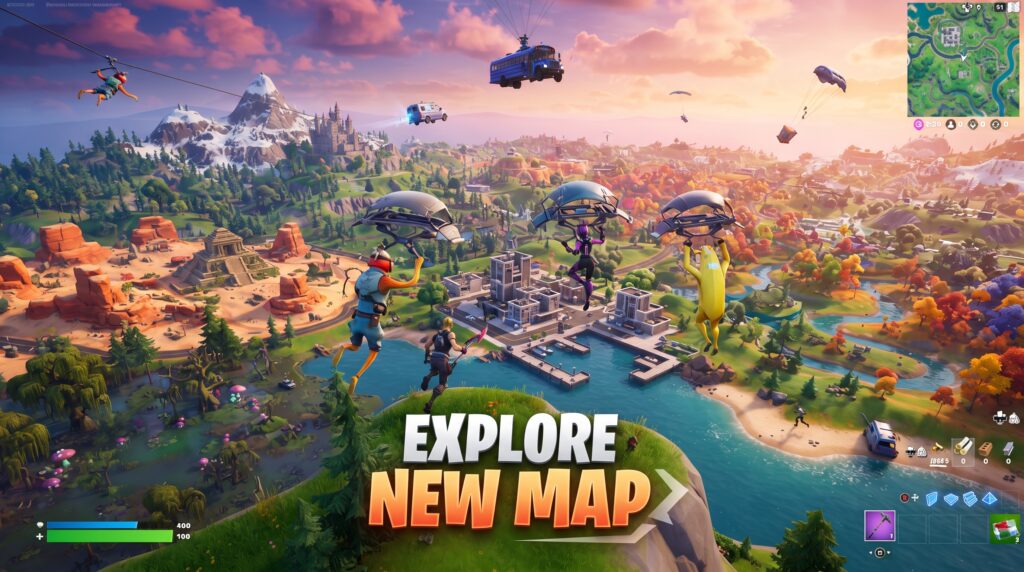
Introduction
Fortnite Runners introduces a major change to the traditional Battle Royale experience. Instead of simply landing, looting, fighting, and trying to reach the Victory Royale, players now have another important objective: find valuable Sprites, extract them safely, and build a collection that can help in future matches.
The Runners season launched with the Shattered Coast, a new island featuring twisted versions of familiar locations. Sprites are spread throughout the island, and each one can provide a different ability when equipped. The important part is that finding a Sprite is only the beginning—you need to successfully extract it if you want to add it to your collection.
This guide explains everything you need to know about Fortnite Runners, including how Sprites work, how extraction works, how to explore the new map, how to protect your collection, and strategies for collecting Sprites more efficiently.
What Is Fortnite Runners?
Fortnite Runners is the name of Chapter 7 Season 3’s Battle Royale experience. The season introduced the Shattered Coast, a rebuilt island designed around fast movement, new weapons, Sprites, and an extraction-style gameplay loop.
The central idea is simple:
Find → Equip → Extract → Collect → Use
Instead of treating every match as a completely separate experience, successful Sprite extraction allows your collection to grow over time. Those collected Sprites can then be brought into later matches to provide their powers.
That makes Runners especially interesting for players who enjoy both Battle Royale combat and collection-based progression.
The Shattered Coast: Understanding the New Map
The Shattered Coast is the central setting for Fortnite Runners.
Rather than receiving an entirely unrelated island, Fortnite reassembles familiar ideas and locations into a new map with a different atmosphere and gameplay flow. Epic describes the island as featuring twisted takes on familiar POIs.
One of the best-known areas is Sunken Shores, while the center of the island is strongly connected to the Zero Point’s influence.
Why the Map Matters
The map is important because your route can determine whether you successfully extract a Sprite or lose it.
A good route should consider:
- Where you land
- Where you can find loot
- Nearby Sprite opportunities
- Extraction locations
- Enemy activity
- The storm’s direction
- Your available mobility
- How much time you have
The biggest mistake new players make is thinking only about finding a Sprite.
The real objective is getting the Sprite out alive.
What Are Sprites in Fortnite Runners?
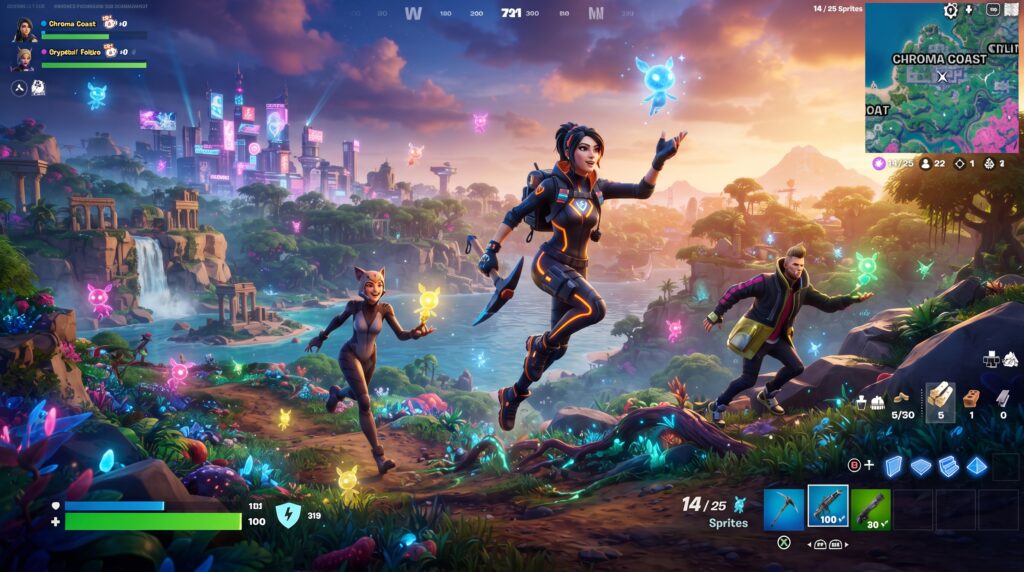
Sprites are special collectible companions that provide Sprite Powers when equipped.
Epic explains that different Sprites can provide abilities such as shields, temporary invisibility, or bonus burst damage. Some of the rarer Sprites can have a major effect on how you approach a match.
This makes Sprite selection an important part of your strategy.
Instead of asking:
“Which Sprite looks the coolest?”
experienced players should also ask:
“Which Sprite fits my playstyle?”
A defensive player may prefer a Sprite that helps with survivability, while an aggressive player may benefit more from an offensive ability.
How to Find Sprites
Finding Sprites is the first stage of the collection process.
When exploring the Shattered Coast, pay attention to your surroundings and investigate areas where loot and other points of interest are located.
Step 1: Choose Your Landing Area
Don’t automatically land at the busiest location.
If your goal is Sprite collection rather than getting 10 eliminations immediately, consider landing somewhere that gives you:
- Enough loot to survive
- A nearby Sprite opportunity
- A reasonable path toward extraction
- Mobility options
- Room to escape if another squad arrives
Step 2: Loot Quickly
You don’t need the perfect loadout before looking for a Sprite.
Prioritize:
- A reliable weapon
- Shields or healing
- Mobility
- Enough ammunition
- Your Sprite objective
Once you’re equipped, start moving.
Step 3: Search the Area
Explore nearby locations rather than wandering randomly across the island.
The goal is to create a route:
Landing Zone → Loot → Sprite → Extraction Site → Safe Rotation
This is much more efficient than collecting a Sprite and then discovering that you’re surrounded by enemies with no escape route.
How to Collect a Sprite
Finding a Sprite does not automatically mean it is permanently yours.
The extraction mechanic is the key difference between ordinary Sprite usage and permanent collection.
A basic collection run works like this:
1. Find a Sprite
Locate a Sprite during your match.
2. Pick It Up
Equip or carry the Sprite so that you can use its associated power.
3. Locate an Extraction Site
Look for an available extraction location.
4. Start the Extraction
Interact with the extraction equipment and begin the process.
5. Defend Yourself
This is where things become dangerous.
Other players may notice the extraction activity and attempt to eliminate you before you complete the process.
6. Complete the Extraction
Successfully survive the extraction process.
7. Add the Sprite to Your Collection
The extracted Sprite becomes part of your collection and can be used in future matches.
The Most Important Rule: Extract Before You Fight
One of the biggest lessons in Fortnite Runners is:
Don’t risk a valuable Sprite unnecessarily.
Imagine you find a rare Sprite immediately after landing.
You could:
Option A: Run directly toward a busy fight and potentially lose it.
Option B: Gather basic supplies, find a sensible extraction route, and secure it first.
For collection-focused gameplay, Option B is usually the smarter approach.
Once the Sprite has been safely extracted, you can focus more heavily on eliminations and Victory Royale attempts.
How Extraction Works
Extraction is designed to create tension.
You don’t simply pick up a Sprite and instantly add it to your collection. You need to reach an extraction location and successfully complete the process.
This creates a risk-versus-reward situation:
Sprite in your inventory = potential reward
Successful extraction = permanent collection progress
Getting eliminated before extraction = lost opportunity
According to Epic’s official overview, players must find a Sprite and extract it to add it to their collection for use in future matches.
How to Survive an Extraction
Extraction locations can become extremely dangerous because other players understand what you’re trying to accomplish.
Use these strategies:
Build or Use Cover
Don’t stand in an open area if you can avoid it.
Use terrain, buildings, natural cover, and structures to reduce the number of angles enemies can attack from.
Watch Your Surroundings
Before starting extraction, look around.
Ask:
- Did I hear footsteps?
- Did I see an enemy nearby?
- Is another squad fighting close to me?
- Do I have an escape route?
- Is the storm approaching?
Don’t Waste Your Mobility
Keep at least one mobility option available whenever possible.
If something goes wrong, mobility can turn a failed extraction into a successful escape.
Play With a Squad
Squad play can make extraction considerably easier.
One player can focus on the extraction process while teammates watch nearby approaches.
Sprites are valuable because they aren’t simply collectibles.
Each Sprite can provide a special ability when equipped.
Epic highlights abilities including:
- Shield-related effects
- Temporary invisibility
- Bonus burst damage
- Other powerful effects depending on the Sprite
Rarer Sprites can potentially have an even greater influence on your match.
Because of this, players should learn what each Sprite does rather than automatically choosing one based on rarity.
Sprite Rarity and Why It Matters
Sprite rarity can influence how desirable a Sprite is.
Community guides have documented different rarity levels and powers, with rare and higher-tier Sprites becoming especially attractive targets for collectors.
However, a rare Sprite isn’t always automatically the best option.
For example:
Aggressive player: May prefer offensive power.
Defensive player: May prefer shields or survivability.
Solo player: May value an ability that helps escape dangerous situations.
Squad player: May benefit from powers that help teammates.
The best Sprite is often the one that matches your strategy.
Portable Extraction: A Useful Option
Some guides also document the use of Portable Extractors, giving players another way to complete the extraction process.
The important lesson is to understand your extraction options before you commit to a risky route.
If you have a portable extraction option available, it can potentially change how you approach the map and reduce the distance you need to travel with a valuable Sprite.

Best Fortnite Runners Strategy for Beginners
If you’re playing Runners for the first time, don’t try to master everything in one match.
Use this simple strategy.
Phase 1: Land Safely
Choose an area where you can get basic weapons and shields without immediately entering a massive fight.
Phase 2: Get Your First Sprite
Search the surrounding area.
Don’t spend the entire early game chasing a perfect Sprite.
Phase 3: Prepare for Extraction
Before going to an extraction point, make sure you have:
- Weapons
- Ammo
- Shield/healing
- Mobility
- A clear route
Phase 4: Extract
Start the extraction when you believe the area is reasonably safe.
Phase 5: Rotate
Once your Sprite is secured, continue the match normally.
You can now focus on:
- Eliminations
- Better loot
- Positioning
- Storm rotation
- Victory Royale
Advanced Sprite Collection Strategy
Once you understand the basics, you can start optimizing your collection runs.
1. Prioritize New Sprites
If your collection is missing a Sprite, prioritize it over repeatedly extracting one you already own.
Your long-term objective is to expand your collection.
2. Learn the Map
Knowing the Shattered Coast will make every future run easier.
Memorize:
- Major POIs
- Common rotation routes
- Extraction areas
- High-ground locations
- Mobility opportunities
- Dangerous landing zones
3. Don’t Chase Every Fight
A fight can cost you valuable time.
If your objective is collecting Sprites, there’s no reason to fight every player you encounter.
Sometimes the best move is simply:
Run. Rotate. Extract.
4. Use the Storm to Your Advantage
Don’t wait until the storm is already closing around you.
Plan your extraction route with the next safe zone in mind.
How to Master Your Sprites
Collecting a Sprite is only part of the progression system.
Sprite Mastery adds another layer for players who want to invest more time into their collection.
Mastery can contribute to progression rewards and collection-related features, although it should not be confused with permanently keeping a Sprite’s in-match level.
If you’re serious about completing your collection, focus on repeatedly using and improving your Sprites rather than simply collecting one copy and forgetting about it.
Sprite Dust: What Is It Used For?
Sprite Dust is another important part of the Runners progression system.
Extraction can reward Sprite Dust, which can then be used for activities involving your Sprite collection, including summoning or upgrading Sprites according to current guides.
This creates a useful progression loop:
Find Sprite → Extract → Earn Dust → Improve Collection → Enter Another Match
The more efficiently you complete this loop, the faster you can build your collection.
Best Loadout for Sprite Hunting
There isn’t one perfect loadout for every player, but Sprite hunters should generally prioritize survival and mobility.
A balanced setup might include:
Slot 1: Reliable Close-Range Weapon
Useful when enemies push your extraction position.
Slot 2: Medium/Long-Range Weapon
Useful for defending an extraction site from a distance.
Slot 3: Healing or Shield Item
Essential after taking damage.
Slot 4: Mobility
Extremely valuable for escaping fights and rotating toward extraction.
Slot 5: Sprite
Your primary collection objective.
The exact weapons and items available can change with Fortnite updates, so focus on the role each slot needs to fulfill rather than memorizing one permanent loadout.
Solo vs Squad Sprite Collection
Solo
Solo players need to be much more careful.
Your biggest advantage is stealth.
Avoid unnecessary fights and choose extraction locations carefully.
A good solo sequence is:
Loot → Find Sprite → Scout → Extract → Escape
Duos
Duos provide a strong balance between mobility and support.
One player can watch the area while the other handles extraction.
Squads
Squads can make aggressive collection runs easier.
Assign roles:
- Player 1: Extraction
- Player 2: Close defense
- Player 3: Long-range overwatch
- Player 4: Rotation/scouting
This makes the extraction process much more organized.
Common Mistakes to Avoid
Mistake #1: Extracting Without Enough Loot
Don’t rush into an extraction situation with no weapons or healing.
Mistake #2: Carrying a Sprite Through Every Fight
If your main objective is collection, unnecessary fights increase your risk.
Mistake #3: Ignoring the Storm
A perfect Sprite route is useless if the storm forces you into a terrible rotation.
Mistake #4: Standing in the Open
Extraction can attract attention. Use cover.
Mistake #5: Using All Your Mobility Too Early
Save something for your escape.
Mistake #6: Chasing a Rare Sprite When You’re Unprepared
A rare Sprite isn’t worth losing an entire match if you’re carrying no healing, no ammo, and no escape option.
If your main goal is completing the collection, use a repeatable routine.
Collection Run
Step 1: Land near a reliable loot area.
Step 2: Get a basic loadout.
Step 3: Search for a Sprite.
Step 4: Equip it.
Step 5: Avoid unnecessary fights.
Step 6: Move toward an extraction location.
Step 7: Scout before starting extraction.
Step 8: Defend the extraction.
Step 9: Complete the extraction.
Step 10: Repeat the process in your next match.
This approach is much more reliable than trying to collect Sprites while constantly engaging every enemy.
Weekly Events and Sprite Hunting
Runners also introduced recurring Sprite-focused activities.
Community tracking of the season’s schedule has highlighted events such as Mastery Mondays, new Sprite or variant releases, and collection-focused periods.
These events can be especially useful for collectors because they can provide better opportunities to progress your Sprite collection.
If you’re trying to collect everything, check the current in-game schedule before starting a long hunting session because Fortnite’s events and availability can change.
New Sprites and Variants
The Sprite system has continued to expand throughout the season.
For example, later updates introduced new Sprite types and variants, including Quack Sprites in late July 2026.
This means a complete collection guide can change as Fortnite adds new content.
Players who want every Sprite should regularly check Fortnite’s latest updates rather than relying on an old list.
Epic has also announced that Sprites will continue into Chapter 7 Season 4, with a new generation of Sprites, new powers and variants, plus the Sprite Garden.

What Happens to Your Sprites After Runners?
One of the most interesting parts of the system is that your collected Runners Sprites aren’t simply forgotten when the season changes.
Epic has announced that Sprites collected during Runners will carry forward into the next season’s Sprite Garden, while also remaining part of the Sprite Collection.
That makes collecting them more valuable for completionists.
Fortnite Runners: Complete Play Guide
Here is the entire gameplay loop in simple terms:
Before Landing
Choose your landing location based on loot, Sprite opportunities, and your planned rotation.
After Landing
Find weapons, shields, and mobility.
Early Game
Search for a Sprite and choose one that fits your playstyle.
Mid Game
Move toward an extraction opportunity while avoiding unnecessary fights.
Extraction
Scout the area, begin extraction, defend yourself, and survive until the process is complete.
After Extraction
Your Sprite is secured. Continue playing for eliminations and Victory Royale.
Between Matches
Review your collection, use your available progression systems, and decide which Sprite you want to hunt next.
Frequently Asked Questions
What is Fortnite Runners?
Fortnite Runners is Chapter 7 Season 3’s Battle Royale experience centered around the Shattered Coast map, Sprite collection, extraction gameplay, fast movement, and new weapons.
What are Sprites in Fortnite Runners?
Sprites are collectible companions that provide special Sprite Powers when equipped. Their abilities can include defensive, offensive, and utility effects.
How do I collect a Sprite permanently?
Find a Sprite during a match, take it to an extraction opportunity, successfully complete the extraction, and survive. The Sprite can then become part of your collection for future matches.
Where is the Fortnite Runners map?
The Runners island is called the Shattered Coast. It is a rebuilt island featuring altered versions of familiar Fortnite locations.
Can I use collected Sprites in future matches?
Yes. Epic says extracted Sprites can be brought into future matches so players can gain their powers from the beginning.
What is Sprite Dust?
Sprite Dust is a progression resource associated with the Sprite system. It can be earned through extraction and used for collection-related activities such as summoning or upgrading Sprites.
Are rare Sprites better?
Not necessarily for every player. Rarer Sprites can have powerful abilities, but the best Sprite depends on your preferred playstyle and the situation.
Can I collect Sprites while playing solo?
Yes. Solo players can collect Sprites, but they need to be more careful during extraction because there are no teammates available to defend them.
What is the best strategy for collecting Sprites?
Prioritize survival over unnecessary fights. Get basic loot, find a Sprite, plan your extraction route, scout the extraction area, and save mobility for emergencies.
Are Sprites still relevant after Runners?
Yes. Epic has announced that Runners-era Sprites will carry into Chapter 7 Season 4’s Sprite Garden and remain part of the Sprite Collection.
Final Thoughts
Fortnite Runners changes the usual Battle Royale formula by giving players a reason to think beyond the current match.
The Shattered Coast isn’t just a new map to explore. It is a playground for collecting, extracting, upgrading, and mastering Sprites.
The most important lesson is simple:
Finding a Sprite is easy. Getting it out safely is the real challenge.
If you want to build a complete collection, focus on smart rotations, efficient looting, careful extraction, and choosing Sprite Powers that complement your playstyle.
Whether you’re a casual Fortnite player, a completionist, or someone who loves discovering new mechanics, the Sprite system gives every match another objective to chase.
And as new Sprites and variants continue to arrive, the best collectors will be the players who learn the map, understand the extraction system, and know when to fight—and when to simply run.
Meta Title
AI vs Human Jobs: What Will Change by 2030? Future Careers, Opportunities & Risks
Meta Description
Will AI replace human jobs by 2030? Discover which careers are at risk, which jobs will grow, and how workers can adapt to the future of artificial intelligence and automation.
CONTEXT:
AI vs human jobs
jobs AI will replace by 2030
future of work 2030
artificial intelligence jobs
AI replacing jobs
jobs safe from AI
careers in demand 2030
future careers and AI
automation and employment
AI impact on workforce
will artificial intelligence replace human jobs by 2030
best careers that will survive AI automation
future of jobs in the age of artificial intelligence
high paying jobs that AI cannot replace
how to prepare for AI driven job market
AI versus human workforce comparison
careers that will grow because of AI
impact of generative AI on employment
future skills needed for jobs in 2030
industries most affected by artificial intelligence
Introduction
Artificial Intelligence has become one of the most disruptive technologies in modern history. From writing content and generating images to analyzing data and automating customer service, AI is changing how businesses operate and how employees work.
One question dominates discussions among workers, students, business owners, and governments:
Will AI replace human jobs by 2030?
The answer is more complex than a simple yes or no.
AI will undoubtedly automate many tasks currently performed by humans. Some jobs will disappear, some will transform, and entirely new career categories will emerge. History shows that technological revolutions often eliminate certain roles while creating opportunities in others.

By 2030, the workforce will look significantly different from today. The individuals who adapt early, learn future-proof skills, and understand how to work alongside AI will have the greatest advantage.
This guide explores what AI means for employment, which jobs are most vulnerable, which careers are expected to thrive, and how workers can prepare for the next decade.
Understanding the AI Revolution
Artificial Intelligence is not merely another software upgrade.
Unlike previous technologies that automated physical labor, AI can automate cognitive tasks that were traditionally performed by educated professionals.
Modern AI systems can:
- Write articles
- Analyze financial reports
- Generate marketing campaigns
- Answer customer inquiries
- Create software code
- Design graphics
- Translate languages
- Conduct research
This capability is why many experts believe AI could have a greater impact on employment than previous industrial revolutions.
However, AI still has limitations.
It lacks:
- Human empathy
- Emotional intelligence
- Ethical judgment
- Creativity based on lived experiences
- Complex interpersonal communication
These limitations suggest that the future belongs to collaboration between humans and AI rather than complete replacement.
How AI Is Already Changing Jobs
Many workplaces are experiencing AI integration today.
Employees increasingly use AI tools for:
Administrative Tasks
AI automates scheduling, data entry, report generation, and document management.
Customer Service
Chatbots handle routine customer questions, reducing workloads for support teams.
Marketing
AI assists with content creation, ad optimization, audience targeting, and analytics.
Software Development
Developers use AI coding assistants to accelerate programming tasks.
Healthcare
AI supports diagnostics, medical imaging analysis, and patient monitoring.
Instead of eliminating entire professions overnight, AI is currently changing daily workflows and productivity expectations.
Jobs Most Likely to Be Replaced by AI by 2030
Not all jobs face the same level of risk.
Roles involving repetitive, predictable, and rules-based tasks are most vulnerable.
1. Data Entry Clerks
Data entry is highly repetitive and follows structured patterns.
AI systems can process and organize information much faster than humans.
Risk Level: Very High
2. Basic Customer Service Representatives
AI chatbots now handle millions of customer interactions daily.
Simple inquiries are increasingly resolved without human involvement.
Risk Level: High
3. Bookkeeping and Basic Accounting
AI accounting software can:
- Track expenses
- Generate reports
- Reconcile transactions
- Detect anomalies
Risk Level: High
4. Telemarketing Professionals
AI voice systems are becoming more sophisticated.
Many outbound sales processes are already automated.
Risk Level: High
5. Basic Content Writers
Generic content production is increasingly supported by AI tools.
Writers focused solely on simple informational articles may face greater competition.
Risk Level: Moderate to High
6. Routine Manufacturing Workers
Factories continue adopting robotics and automation systems.
Repetitive production tasks are becoming increasingly automated.
Risk Level: High
Jobs That Will Thrive Because of AI
While some positions decline, others will experience rapid growth.
1. AI Specialists
Demand for professionals who build, manage, and improve AI systems will continue rising.
Examples include:
- AI Engineers
- Machine Learning Engineers
- AI Product Managers
- AI Researchers
Growth Potential: Extremely High
2. Cybersecurity Experts
As AI systems expand, cybersecurity risks increase.
Organizations need experts to protect sensitive information and AI infrastructure.
Growth Potential: Very High
3. Healthcare Professionals
Human-centered healthcare remains difficult to automate completely.
Demand will grow for:
- Doctors
- Nurses
- Therapists
- Caregivers
- Mental health professionals
Growth Potential: High
4. Skilled Trades
Electricians, plumbers, mechanics, and construction specialists perform physical tasks in unpredictable environments.
These jobs remain difficult for AI and robotics to fully replace.
Growth Potential: Strong
5. Teachers and Educators
AI can support learning but cannot fully replace human mentorship and guidance.
Future educators will likely combine AI tools with personalized instruction.
Growth Potential: Stable to High
Jobs AI Cannot Easily Replace
Some careers rely heavily on uniquely human capabilities.
These include:
Leadership Roles
Successful leaders require:
- Vision
- Judgment
- Inspiration
- Relationship building
Therapists and Counselors
Emotional support depends on empathy and trust.
Entrepreneurs
Business creation requires creativity, risk-taking, and adaptability.
Negotiators
Complex negotiations involve psychology, intuition, and human behavior.
Creative Professionals
Writers, filmmakers, artists, and designers who produce original ideas maintain significant advantages.
The Rise of Human-AI Collaboration
The biggest misconception is that AI will replace all workers.
More likely, workers who use AI effectively will replace workers who do not.
For example:
Marketing Professionals
AI handles research and content generation.
Humans develop strategy and brand voice.
Lawyers
AI reviews documents.
Lawyers focus on negotiations and legal judgment.
Doctors
AI assists diagnosis.
Doctors make treatment decisions and communicate with patients.
The future workforce will increasingly combine human expertise with AI capabilities.
Skills That Will Be Most Valuable by 2030
To remain competitive, workers should develop skills that complement AI.
Critical Thinking
AI generates information.
Humans evaluate its accuracy and implications.
Emotional Intelligence
Relationships, leadership, and collaboration remain human strengths.
Creativity
Innovation continues to require imagination and original thinking.
Problem Solving
Complex real-world challenges demand human judgment.
AI Literacy
Understanding how AI works will become as important as computer literacy today.
Industries Expected to Grow Because of AI
Several sectors are positioned for expansion.
Artificial Intelligence
The AI industry itself will create millions of jobs globally.
Renewable Energy
Growing environmental concerns increase demand for clean energy solutions.
Healthcare Technology
AI-powered healthcare innovations continue expanding.
Digital Education
Online learning platforms are growing rapidly.
Cybersecurity
Rising digital threats create ongoing demand.
How Students Should Prepare for 2030
Students entering the workforce today face a very different future.
Recommended strategies include:
- Learn AI tools early
- Develop communication skills
- Focus on adaptability
- Build problem-solving abilities
- Gain practical experience
- Create a personal brand online
The most successful graduates will combine technical knowledge with human-centered skills.
How Businesses Should Prepare
Companies should view AI as an opportunity rather than a threat.
Key priorities include:
- Employee upskilling
- Responsible AI implementation
- Workforce transformation planning
- Cybersecurity investment
- Human-AI collaboration strategies
Organizations that adapt quickly will gain competitive advantages.
Common Myths About AI and Jobs
Myth 1: AI Will Eliminate All Jobs
Reality: Many jobs will evolve rather than disappear.
Myth 2: Only Low-Skill Workers Are At Risk
Reality: AI affects both white-collar and blue-collar professions.
Myth 3: Learning AI Is Only for Programmers
Reality: Every industry increasingly benefits from AI literacy.
Myth 4: Human Skills No Longer Matter
Reality: Human skills become more valuable as automation increases.
What the Workplace May Look Like in 2030
Imagine a typical workplace in 2030:
- AI assistants handle routine tasks.
- Meetings are automatically summarized.
- Personalized training is AI-driven.
- Customer support is partly automated.
- Human employees focus on creativity, relationships, and strategy.
The workplace becomes more efficient while requiring higher-level human contributions.
Final Verdict: AI vs Human Jobs
The future is not AI versus humans.
The future is AI plus humans.
Artificial Intelligence will automate many repetitive tasks and transform countless professions. Some jobs will disappear, but new opportunities will emerge. Workers who continuously learn, adapt, and embrace technology will remain highly valuable.
By 2030, the most successful professionals will not be those who compete against AI. They will be those who understand how to use AI as a powerful tool to amplify their skills, productivity, and creativity.
The coming decade represents one of the greatest workforce transformations in history. Those who prepare today will be best positioned to thrive tomorrow.
WE LOSSE OPPERTUNITIES
AI is reshaping the global workforce at an unprecedented pace. While automation will replace certain tasks and occupations, it will also create new industries, career paths, and opportunities.
The key question is no longer whether AI will affect jobs—it already is. The real question is how individuals, businesses, and societies will adapt.
BUT WE HAVE CREATIVITY&SKILLS
The winners of the AI era will be lifelong learners who combine technological knowledge with uniquely human abilities such as creativity, empathy, leadership, and critical thinking. These skills will remain essential no matter how advanced artificial intelligence becomes.
“AI vs Human Jobs,” “Will AI replace jobs by 2030,” “Jobs AI cannot replace,” “Future of work 2030,” and “Careers safe from AI automation.”
AI-Powered Side Hustles in 2026: The Complete Guide to Building Multiple Income Streams with Artificial Intelligence
Meta Description

Discover the best AI-powered side hustles in 2026. Learn how to use artificial intelligence to create passive income, start online businesses, generate traffic, earn from content creation, and build profitable digital assets.
- AI-powered side hustles in 2026
- AI business ideas
- make money with AI
- AI side hustles for beginners
- best AI side hustles
- AI passive income ideas
- online business ideas 2026
- AI money-making strategies
Long-Tail Keywords:
- how to make money with artificial intelligence in 2026
- best AI tools for online business growth
- profitable AI-powered business ideas for beginners
- passive income with AI tools
- AI content creation business strategy
- start an AI side hustle with no investment
- AI freelancing opportunities in 2026
- AI digital product business ideas
- AI affiliate marketing strategies
- future-proof online businesses using AI
Introduction
Artificial Intelligence is no longer a futuristic concept. In 2026, AI has become one of the most powerful tools for entrepreneurs, freelancers, content creators, and small business owners. People who understand how to combine AI technology with human creativity are building profitable businesses faster than ever before.
The biggest advantage of AI-powered side hustles is that they allow individuals to automate repetitive tasks, increase productivity, reduce operating costs, and generate income from multiple sources simultaneously.
Whether you are a student, stay-at-home parent, freelancer, employee, or aspiring entrepreneur, AI can help you create new income streams without requiring a large startup budget.
In this guide, you’ll discover the best AI-powered side hustles in 2026, how they work, and how you can build a sustainable online business around them.
Why AI Side Hustles Are Exploding in 2026
Several factors are driving the growth of AI-based businesses:
1. Low Startup Costs
Many AI tools offer free plans or affordable subscriptions. This allows beginners to launch businesses without investing thousands of dollars.
2. Increased Productivity
Tasks that once required hours can now be completed in minutes.
Examples include:
- Writing articles
- Creating social media posts
- Designing graphics
- Video editing
- Customer support
- Market research
3. Global Demand
Businesses worldwide need AI-powered solutions to stay competitive.
This creates opportunities for freelancers, consultants, and agency owners.
4. Scalability
Unlike traditional side hustles, AI businesses can scale quickly because automation handles much of the workload.
AI Side Hustle #1: AI Content Creation Business
Content remains one of the most valuable assets online.
Businesses need:
- Blog articles
- Website copy
- Social media posts
- Product descriptions
- Email campaigns
AI writing tools can dramatically increase content production speed.
How to Start
- Learn content marketing basics.
- Use AI to generate drafts.
- Edit content manually.
- Offer services to businesses.
Potential Income
Beginners: $500–$2,000/month
Experienced creators: $5,000–$20,000+/month
One of the fastest-growing business models involves creating YouTube videos without showing your face.
AI can assist with:
- Script writing
- Voiceovers
- Video editing
- Thumbnail creation
Popular Niches:
- Finance
- Technology
- Business
- Motivation
- Education
Revenue comes from:
- AdSense
- Sponsorships
- Affiliate marketing
AI Side Hustle #3: AI-Powered Blogging
Blogging remains one of the best long-term passive income strategies.
AI can help with:
- Keyword research
- Article outlines
- Content optimization
- SEO improvements
Traffic sources include:
- Google Search
Monetization methods:
- Display ads
- Affiliate marketing
- Digital products
- Sponsored content
AI Side Hustle #4: Affiliate Marketing with AI
Affiliate marketing continues to be one of the most profitable online business models.
AI can help you:
- Find profitable niches
- Create product reviews
- Write comparison articles
- Build email campaigns
Top affiliate niches include:
- Software
- Finance
- Business tools
- Health
- Education
AI Side Hustle #5: Social Media Management
Small businesses constantly need help managing their social media presence.
AI simplifies:
- Post creation
- Scheduling
- Caption writing
- Content planning
Services can include:
- Facebook management
- Instagram growth
- LinkedIn content
- TikTok marketing
AI Side Hustle #6: AI Graphic Design Services
Modern AI tools can assist with:
- Logo creation
- Social media graphics
- Marketing materials
- Presentation design
This creates opportunities to serve:
- Startups
- Influencers
- Small businesses
- E-commerce stores
AI Side Hustle #7: AI Chatbot Development
Businesses want automated customer support systems.
AI chatbots can:
- Answer customer questions
- Generate leads
- Handle bookings
- Provide product recommendations
Demand for chatbot implementation is expected to continue growing throughout 2026.
AI Side Hustle #8: AI Digital Product Business
Digital products can generate passive income.
Examples include:
- Templates
- Checklists
- E-books
- Planners
- Business frameworks
AI helps speed up creation and research.
Once created, digital products can be sold repeatedly.
AI Side Hustle #9: AI-Powered Online Courses
Online education continues expanding worldwide.
Use AI to:
- Research course topics
- Create lesson plans
- Develop presentations
- Write worksheets
Popular topics include:
- Business
- Marketing
- Productivity
- AI itself
- Personal finance
AI Side Hustle #10: AI Consulting
Many companies still struggle to implement AI effectively.
Consultants help businesses:
- Choose AI tools
- Automate workflows
- Improve efficiency
- Reduce costs
This side hustle has some of the highest earning potential.
Step-by-Step Strategy for Building an AI Side Hustle
Step 1: Select a Profitable Niche
Choose a niche based on:
- Demand
- Personal interest
- Monetization opportunities
Examples:
- Business
- Technology
- Finance
- Education
- Productivity
Step 2: Build a Personal Brand
Create profiles on:
- X
- YouTube
Consistency builds trust.
Step 3: Create Valuable Content
Focus on solving problems.
Content should:
- Educate
- Inform
- Entertain
- Inspire
High-quality content attracts organic traffic.
Step 4: Build an Audience
Use:
- SEO
- Social media
- Email marketing
- Community engagement
Audience growth is the foundation of long-term income.
Step 5: Monetize
Potential revenue streams:
- Affiliate marketing
- Ad revenue
- Consulting
- Digital products
- Memberships
- Sponsorships
Diversification increases stability.
Common Mistakes to Avoid
Over-Relying on AI
AI should assist, not replace, human creativity.
Always edit and fact-check content.
Ignoring SEO
Without SEO, content struggles to rank.
Keyword research remains essential.
Chasing Too Many Ideas
Focus on one side hustle until it gains traction.
Neglecting Audience Relationships
People buy from creators they trust.
Build genuine connections.
Future of AI Side Hustles Beyond 2026
The next wave of AI opportunities will likely include:
- AI agents
- Personalized education platforms
- Automated e-commerce businesses
- AI-powered virtual assistants
- Industry-specific automation services
Entrepreneurs who learn AI today will have a major advantage in the years ahead.
Conclusion
AI-powered side hustles are transforming how people earn money online. The combination of artificial intelligence, content creation, digital marketing, and entrepreneurship creates opportunities that were unimaginable just a few years ago.
Success in 2026 will not come from simply using AI. It will come from using AI strategically to provide value, solve problems, and build meaningful relationships with audiences and customers.
Whether you start an AI blog, launch a faceless YouTube channel, offer AI consulting services, or create digital products, the opportunity is enormous for those willing to learn and take action.
The future belongs to individuals who combine technology with creativity, and AI-powered side hustles are one of the most exciting ways to build wealth in the digital economy.

15 Best AI Tools for Bloggers in 2026: Write Faster, Create Better Content & Grow Traffic
Fortnite Runners: Explore the New Map and Collect Every Sprite
How to Rank a New Website on Google in 2026: A Complete Beginner’s SEO Guide

Unique Social Media Template Ideas for Family Content: Stand Out with Meaningful Storytelling
AI vs Human Jobs: What Will Change by 2030? The Complete Future of Work Guide

How to Start a Successful Online Business in 2026: Complete Step-by-Step Guide for Beginners
-
 Uncategorized5 months ago
Unique Social Media Template Ideas for Family Content: Stand Out with Meaningful Storytelling
-
Uncategorized4 months ago
AI vs Human Jobs: What Will Change by 2030? The Complete Future of Work Guide
-
 Uncategorized5 months ago
How to Start a Successful Online Business in 2026: Complete Step-by-Step Guide for Beginners
-
Uncategorized1 month ago
Fortnite Runners: Explore the New Map and Collect Every Sprite
-
Uncategorized4 months ago
Best AI Tools for Students in 2026: Study Smarter, Learn Faster, and Save Time
-
Uncategorized4 months ago
Demystifying the AI Hardware Boom:- What Cerebras Systems’ $67B IPO Means for Developers…..
-
BUSINESS1 month ago
15 Best AI Tools for Bloggers in 2026: Write Faster, Create Better Content & Grow Traffic
-
 Uncategorized5 months ago
Sustainable Living on a Budget: 25+ Practical Tips That Actually Save You Money