Business
How to Start a Small Business With Low Investment in 2026

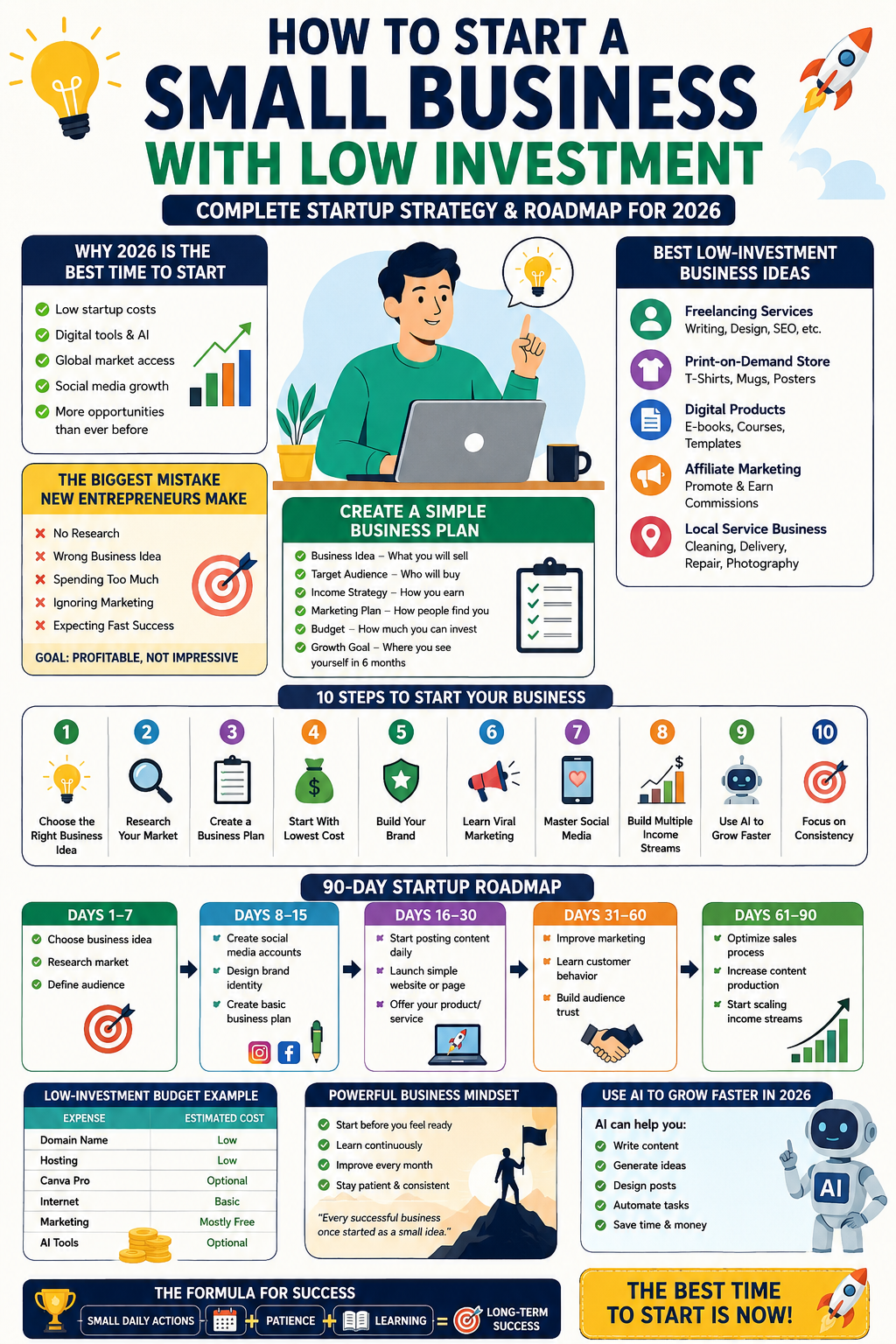
The Complete Startup Strategy & Step-by-Step Roadmap for Beginners
Starting a business no longer requires huge capital, fancy offices, or investors. In 2026, thousands of people are building profitable businesses from home using only a laptop, smartphone, and internet connection. The biggest difference between people who succeed and people who fail is not money — it’s strategy.
If you want to start a small business with low investment, this complete guide will show you exactly how to begin, grow, and scale your business even if you have limited resources.
This article is designed to be practical, beginner-friendly, and powerful enough to help you create a business roadmap that actually works.
Why 2026 Is the Best Time to Start a Small Business
The digital economy is growing faster than ever. People are buying online, learning online, hiring online, and building brands online. This creates massive opportunities for small businesses with very low startup costs.
Today, you can:
- Sell products without owning inventory
- Start a service business from home
- Use AI tools to save time and money
- Reach global customers using social media
- Build a personal brand for free
Unlike traditional businesses, modern online businesses can start with almost zero investment.
The Biggest Mistake New Entrepreneurs Make
Most beginners fail because they:
- Start without research
- Choose the wrong business idea
- Spend too much money too early
- Ignore marketing
- Expect fast success
A smart entrepreneur starts small, tests ideas, and grows slowly.
The goal is not to look successful.
The goal is to become profitable.
Step 1: Choose the Right Low-Investment Business Idea
The foundation of every successful startup is choosing the correct business model.
You should pick a business that:
- Solves a problem
- Has demand
- Can start cheaply
- Matches your skills or interests
- Has long-term growth potential
Best Low-Investment Business Ideas for 2026
1. Freelancing Business
Offer services like:
- Content writing
- Graphic design
- Video editing
- SEO
- Web development
- Social media management
Startup Cost: Very low
2. Print-on-Demand Store
Sell custom:
- T-shirts
- Hoodies
- Mugs
- Posters
No inventory needed.
3. Digital Products Business
Create and sell:
- E-books
- Templates
- Online courses
- Notion planners
- AI prompts
Profit margins are extremely high.
4. Affiliate Marketing
Promote products and earn commissions when people buy.
Best platforms:
- Blogging
- YouTube
- TikTok
5. Small Local Service Business
Examples:
- Home cleaning
- Car washing
- Delivery services
- Mobile repair
- Photography
These businesses often need very little investment.
Step 2: Research Your Market Before Spending Money
Most businesses fail because nobody wants their product.
Before launching, ask:
- Who is my customer?
- What problem am I solving?
- What competitors already exist?
- Why would people choose me?
Easy Market Research Strategy
Use Social Media
Check:
- Facebook groups
- Reddit discussions
- TikTok trends
- YouTube comments
Look for common problems people complain about.
Use Google Search
Search:
- “Best products for…”
- “How to solve…”
- “Affordable…”
High search volume means high demand.
Step 3: Create a Simple Business Plan
You do NOT need a 100-page business document.
A one-page business roadmap is enough.
Simple Business Plan Structure
Your Business Idea
What are you selling?
Target Audience
Who will buy it?
Income Strategy
How will you make money?
Marketing Plan
How will people find you?
Budget
How much can you invest?
Growth Goal
What do you want to achieve in 6 months?
Step 4: Start With the Lowest Possible Cost
Many beginners waste money on:
- Expensive logos
- Fancy websites
- Office space
- Paid ads too early
Instead, focus on essentials.
Smart Low-Budget Startup Strategy
Free Tools You Can Use
- Canva for design
- Google Docs for planning
- ChatGPT for content ideas
- CapCut for video editing
- Social media for marketing
Use Free Marketing First
Organic traffic is powerful in 2026.
Focus on:
- 1:TikTok videos
- 2:Instagram Reels
- 3:Pinterest posts
- 4:SEO blogging
- 5:YouTube Shorts
These platforms can bring customers without paying for ads.
Step 5: Build a Powerful Brand Identity
People buy from brands they trust.
Even a small business can look professional.
How to Build a Strong Brand
Choose:
- A simple business name
- Clean logo
- Consistent colors
- Clear message
Your Brand Message Should Answer:
- What do you do?
- Who do you help?
- Why should people trust you?
Step 6: Learn the Viral Marketing Formula of 2026
Attention is the new currency.
If nobody sees your business, nobody buys from you.
Viral Content Strategy
Create Content That:
- Solves problems
- Saves time
- Entertains people
- Teaches something useful
- Creates emotion
Content Ideas That Go Viral
“How To” Content
Example:
“How I Started a Business With Only $50”
Before & After Stories
People love transformation content.
Mistake-Based Content
Example:
“5 Business Mistakes That Kept Me Broke”
Behind-the-Scenes Content
Show your business journey.
Authenticity wins in 2026.
Step 7: Master Social Media Marketing
Social media is the cheapest business growth tool in the world.
Best Platforms for Business Growth
TikTok
Best for fast viral growth.
Perfect for branding and engagement.
YouTube
Great for long-term traffic.
Excellent for blogs and online stores.
Best for professional services and B2B businesses.
Step 8: Build Multiple Income Streams
Successful entrepreneurs never depend on one source of income.
Example Business Expansion
If you start a blog, later you can add:
- Affiliate marketing
- E-books
- Sponsored posts
- Online courses
- Coaching services
This creates financial stability.
Step 9: Use AI to Grow Faster in 2026
AI is changing business completely.
Smart entrepreneurs use AI to save time and scale faster.
How AI Helps Small Businesses
AI Can Help You:
- Write content
- Create marketing ideas
- Design social media posts
- Generate product descriptions
- Automate customer support
This reduces costs dramatically.
Step 10: Focus on Consistency, Not Perfection
Most people quit too early.
The first few months may feel slow. That is normal.
Businesses grow through consistency.
The Real Formula for Success
Small daily actions
+
Patience
+
Learning
Long-term business success
Complete 90-Day Startup Roadmap
Days 1–7
- Choose business idea
- Research market
- Define audience
Days 8–15
- Create social media accounts
- Design brand identity
- Create basic business plan
Days 16–30
- Start posting content daily
- Launch simple website or page
- Offer your product/service
Days 31–60
- Improve marketing
- Learn customer behavior
- Build audience trust
Days 61–90
- Optimize sales process
- Increase content production
- Start scaling income streams
Low-Investment Business Budget Example
| Expense | Estimated Cost |
|---|---|
| Domain Name | Low |
| Hosting | Low |
| Canva Pro | Optional |
| Internet | Basic |
| Marketing | Mostly Free |
| AI Tools | Optional |
You can realistically start many businesses with a very small budget in 2026.
Powerful Business Mindset for Beginners
Your mindset matters more than your budget.
Many successful businesses started during difficult financial situations.
The key is:
- Start before you feel ready
- Learn continuously
- Improve every month
- Stay patient
Success usually comes to people who continue when others quit.
MY OPINION
Starting a small business with low investment is no longer impossible. In fact, 2026 offers more opportunities than ever before.
What you need is:
- A smart idea
- Consistent action
- Strong marketing
- Patience to grow
Every successful business once started as a small idea.
The best time to start is now.
BEST OF LUCK REGARD SHARIYA

Meta Title: 15 Best AI Tools for Bloggers in 2026 to Save Time & Grow Traffic
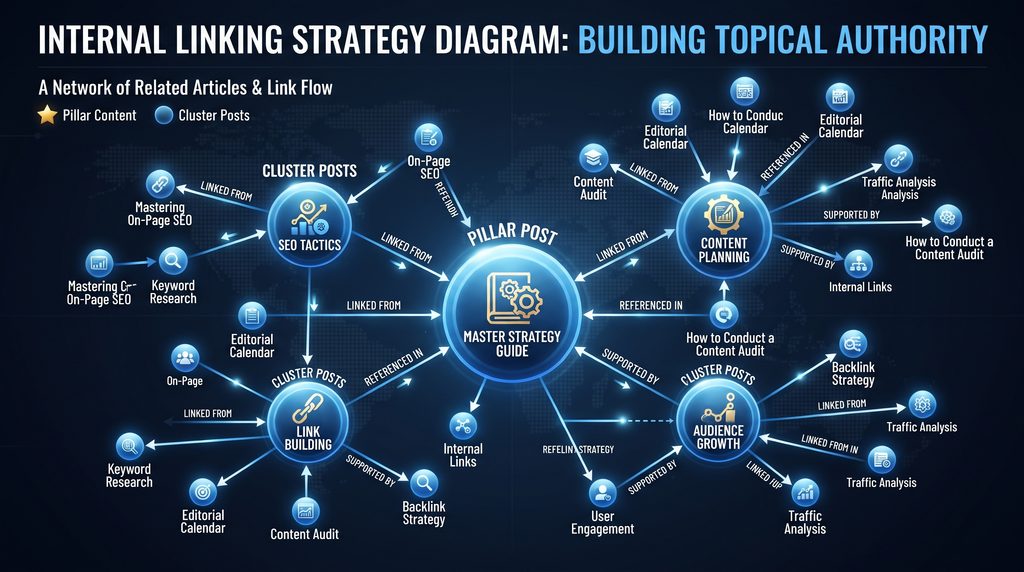
Meta Description: Discover the best AI tools for bloggers in 2026 for writing, research, SEO, images, editing and social media promotion. Build a faster blogging workflow without sacrificing quality.
Primary SEO Keyword: best AI tools for bloggers 2026
Related Keywords: AI writing tools for bloggers, best AI blogging tools, AI tools for content creators, AI SEO tools, AI tools for blog writing, free AI tools for bloggers, AI content creation tools
Suggested URL Slug: /best-ai-tools-for-bloggers-2026/
Writing Blog Posts Takes Hours. What If You Could Cut the Busywork?
Writing a blog post sounds simple until you actually sit down to do it.
First, you need an idea.
Then keyword research.
Then research.
Then an outline.
Then the first draft.
Then editing.
Then SEO optimization.
Then images.
Then social media posts.
And finally, you still have to promote the article.
By the time everything is finished, a single article can consume an entire day—or longer.
That’s where AI tools can make a real difference.
But there’s a problem: there are hundreds of AI tools claiming to be the perfect solution for bloggers.
Some are genuinely useful.
Some are expensive versions of tools you already have.
And some create generic content that still requires significant human editing.
So instead of simply throwing dozens of AI products into a list, this guide focuses on where AI can actually help during the blogging process.
We’ll look at tools for:
- Finding ideas
- Research
- Writing
- Editing
- SEO
- Images
- Content repurposing
- Social media promotion
Most importantly, you’ll learn how to combine them into a workflow that can make blogging faster without turning your website into a collection of generic AI-generated articles.
Google’s current guidance emphasizes helpful, reliable, original, people-first content. AI can assist with research and structure, but using AI to mass-produce pages without adding value can create problems under Google’s spam policies.
⚡ The 3 AI Tools to Know First
If you’re busy and don’t want to learn 15 different platforms, start with three categories.
1. ChatGPT — Your Blogging Assistant
Use it for:
- Brainstorming topics
- Creating outlines
- Drafting sections
- Rewriting awkward sentences
- Creating FAQs
- Turning articles into social posts
- Creating video scripts
- Generating content ideas
ChatGPT is particularly useful as an all-purpose assistant rather than something you should blindly use to produce an entire article.
2. An AI Research Tool — Find Information Faster
AI research tools can help you understand a topic, identify questions people ask and organize information before you start writing.
The important part is verification.
Don’t assume an AI-generated answer is automatically correct. Check important facts against reliable sources.
3. An SEO Tool — Optimize the Finished Article
SEO software can help you analyze:
- Search intent
- Related keywords
- Topic coverage
- Headings
- Content structure
- Competitor pages
The goal isn’t to force a keyword into every paragraph.
The goal is to make your article more useful and easier for search engines and readers to understand.
🤖 15 Best AI Tools for Bloggers in 2026
1. ChatGPT — Best All-Around AI Assistant
If you’re a solo blogger, an all-purpose AI assistant can cover a surprisingly large part of your workflow.
You can use it for brainstorming, outlining, drafting, editing, FAQs and social media repurposing.
Best for:
- Blog ideas
- Outlines
- First drafts
- FAQs
- Social posts
- Video scripts
- Content repurposing
Best blogging workflow:
Instead of asking:
“Help me create an original, useful article for beginners. First identify the reader’s problem, search intent, questions they need answered, and a logical H2/H3 structure.
2. Claude — Excellent for Long-Form Drafting and Editing
Claude is another useful option for bloggers who need help working with longer pieces of text.
You can use it to:
- Improve structure
- Simplify complicated explanations
- Edit paragraphs
- Compare different versions
- Develop a consistent writing style
- Analyze long documents
Recent 2026 comparisons continue to place Claude among the leading general-purpose AI writing options for bloggers.
Best for: Long-form writing assistance and editing.
3. Jasper — Best for Marketing-Focused Content
Jasper is designed more specifically around marketing and brand content.
It can make more sense for bloggers who are building a business, managing multiple content formats or maintaining a consistent brand voice.
Recent 2026 comparisons position Jasper as a premium choice for professional or high-volume content workflows.
Best for: Marketing teams, brands and serious content operations.
Downside: It may be unnecessary for a beginner who only publishes a few articles each month.
4. Grammarly — Best for Editing
Writing the first draft is only half the job.
The second half is making it readable.
An editing assistant can help identify:
- Grammar problems
- Awkward sentences
- Repetition
- Tone problems
- Unclear wording
- Typos
Best for: Final editing and polishing.
A useful workflow is:
Draft → Human edit → Grammar check → Final human review
Don’t let software completely replace your judgment.
5. Canva AI — Best for Blog and Social Graphics
A blog post needs more than text.
You also need:
- Featured images
- Pinterest graphics
- Instagram carousels
- Facebook images
- YouTube thumbnails
- Infographics
Canva AI can help speed up visual creation.
Best for: Bloggers who also promote their content on social media.
This is especially useful for the strategy we’re building for AnbyMagazine.site because one article can become multiple visual assets.
6. Surfer SEO — Best for Content Optimization
SEO tools can help you understand how your content compares with pages already appearing for a search topic.
Surfer is frequently included in current 2026 blogger-tool comparisons for SEO optimization.
Use it to improve:
- Topic coverage
- Keyword usage
- Content structure
- Search intent alignment
But don’t turn your article into a machine-written document just because an optimization score says you should.
Reader satisfaction comes first.
7. Frase — Useful for Research and Content Briefs
Frase can be useful when you want help turning a search topic into a structured content brief.
It can help you identify:
- Questions
- Topics
- Headings
- Search-related concepts
Best for: Bloggers who struggle with planning articles.
8. Perplexity — Useful for Research
Research is one of the biggest time-consuming parts of blogging.
An AI research assistant can help you:
- Explore unfamiliar subjects
- Find potential sources
- Understand complicated concepts
- Generate research directions
But always check important claims against the original source.
AI research should be the beginning of your fact-checking process—not the end.
9. Writesonic — Useful for AI-Assisted Content and Search
Writesonic has evolved beyond simple AI writing and increasingly focuses on AI-search visibility and content workflows.
Recent 2026 comparisons list it among tools aimed at bloggers and marketers who care about AI-search optimization.
Best for: Bloggers experimenting with AI-search and content workflows.
10. Rytr — Budget-Friendly Writing Assistance
Rytr is designed for people who need help generating shorter pieces of content.
It can be useful for:
- Social captions
- Short introductions
- Product descriptions
- Content ideas
- Basic marketing copy
Best for: Beginners and smaller content tasks.
11. NeuronWriter — SEO Content Assistance
SEO-focused tools can help you understand related terms and content topics around a primary keyword.
For a blogger, the important question isn’t:
“How many keywords can I put into this article?”
It’s:
“What information does someone searching this topic actually need?”
Use SEO software to discover gaps—not to stuff keywords.
12. Copy.ai — Useful for Short-Form Marketing Work
Short-form marketing content is a different challenge from writing a 2,000-word guide.
Tools such as Copy.ai can be useful for:
- Social media copy
- Marketing messages
- Content repurposing
- Short-form ideas
Always check current features and pricing before choosing a paid plan because AI products and their pricing change quickly. Current 2026 comparisons show substantial changes across several major AI-writing products.
13. AI Image Generators — Create Original Visual Concepts
AI image generation can help you create visual concepts for:
- Blog headers
- Social posts
- Explainer graphics
- Concept illustrations
- Background images
For AnbyMagazine, this can help you avoid using the exact same generic stock-photo style seen across hundreds of blogs.
But images should support the article rather than simply decorate it.
14. AI Video Tools — Turn Blog Posts Into Short Videos
This is where blogging and social media become powerful together.
Your article:
“15 Best AI Tools for Bloggers”
can become:
Instagram Reel:
“3 AI tools bloggers should know”
TikTok:
“Writing blog posts takes hours? Try this workflow.”
YouTube Short:
“5 AI tools that can speed up blogging”
Facebook video:
“How I would build a faster blogging workflow in 2026”
One article can become an entire content campaign.
15. AI Social Media Assistants — Repurpose Your Articles
Your blog should not stop working after you press Publish.
Use AI to transform an article into:
- Instagram captions
- TikTok hooks
- Facebook posts
- YouTube scripts
- Carousel slides
- Short video ideas
- Email newsletter content
This is one of the biggest advantages of an AI-assisted blogging workflow.
🧠 The Best AI Blogging Workflow in 2026
Here’s the workflow I’d recommend.
Step 1: Find a real problem
Don’t start with:
“What keyword can I rank for?”
Start with:
“What problem does my audience have?”
For this article:
Problem:
Writing blog posts takes hours.
That’s much stronger than simply:
AI tools.
Step 2: Find the search intent
Our primary keyword is:
best AI tools for bloggers 2026
But related questions include:
- What are the best AI tools for blogging?
- What AI tool is best for writing blog posts?
- Are AI tools good for SEO?
- What is the best free AI tool for bloggers?
- Can AI save bloggers time?
- Can AI-generated content rank on Google?
- How can I use AI without making my content generic?
Those questions become your headings and FAQs.
Step 3: Research Before Writing
Use AI to speed up research.
But don’t simply copy its output.
Google’s guidance emphasizes original information, analysis and substantial value beyond what other pages already provide.
That means your article should include:
- Your own recommendations
- Clear use cases
- Pros and cons
- Comparisons
- Examples
- Practical workflows
- Who should use each tool
- Who should avoid it
That’s how you make a generic AI-tools article more useful.
Step 4: Create the First Draft
Now use AI to help structure the article.
But keep your own voice.
A strong article should feel like:
AI-assisted + human edited + fact checked + useful
—not:
AI-generated + published immediately.
Google specifically says AI can be useful for research and structure, but mass-producing pages without adding value can violate its spam policies.
Step 5: Add Human Experience
This is where your article can beat generic competitors.
Instead of saying:
“Tool X is great for bloggers.”
Explain:
Best for: Bloggers who need help creating outlines and repurposing content.
Then give an example.
For example:
Imagine you’re writing an article about Instagram marketing. Instead of asking AI to write the entire article, use it to create an outline, identify questions readers may have and turn your finished article into five Reel ideas.
That’s practical.
Step 6: Optimize for Google
Use your primary keyword naturally.
Primary keyword:
best AI tools for bloggers 2026
Related terms:
- AI tools for blogging
- AI writing tools
- AI SEO tools
- AI content creation tools
- best AI blogging tools
- free AI tools for bloggers
Use them naturally in:
- Title
- Introduction
- H2 headings
- Image alt text where appropriate
- FAQ
- Meta description
- Body content
Don’t repeat the same phrase unnaturally.
Google explicitly says there is no preferred word count; the goal is satisfying the user’s need rather than hitting an arbitrary length.
📱 Turn This Article Into Instagram Content
Now comes the important part.
Your blog shouldn’t live only on Google.
Reel #1
Hook:
“Writing blog posts takes hours? You’re probably doing these 3 things manually.”
Then:
1. Research
2. Outlining
3. Social media repurposing
Then:
“AI can help with all three—but don’t let it replace your original ideas.”
CTA:
“I compared 15 AI tools for bloggers. Full guide at AnbyMagazine.site.”
🎵 Turn It Into a TikTok
Hook:
“If writing one blog post takes you all day, watch this.”
Then:
“Use AI for research.”
“Use AI to build your outline.”
“Use AI to turn your finished article into social content.”
Then:
“But don’t publish raw AI text. Add your own research, examples and experience.”
CTA:
“I put 15 useful AI tools into one guide. Find it at AnbyMagazine.site.”
TikTok’s Creator Search Insights can also help you identify topics people are actively searching for, so test variations of terms such as “AI tools for bloggers,” “AI writing tools” and “AI blogging.”
📘 Facebook Post
Stop Spending All Day Writing One Blog Post
Writing a good article involves much more than typing.
Research.
Outlining.
Writing.
Editing.
SEO.
Images.
Social media.
The good news?
AI can help with many of these tasks.
But the goal isn’t to let AI write your entire website.
The goal is to use AI to remove repetitive work so you can spend more time creating something useful.
I compared 15 AI tools for bloggers in 2026, including tools for writing, SEO, editing, images and social media.
👉 Read the complete guide on AnbyMagazine.site
📸 Instagram Carousel
Slide 1
15 AI Tools Bloggers Need in 2026
Slide 2
Writing taking too long?
Here’s where AI can help.
Slide 3
Research
Find ideas and organize information faster.
Slide 4
Writing
Create outlines and improve drafts.
Slide 5
SEO
Understand topics and optimize your finished article.
Slide 6
Images
Create better visual content.
Slide 7
Social Media
Turn one article into multiple posts.
Slide 8
But don’t publish raw AI content.
Add your own research, examples and experience.
Slide 9
Want the complete list?
15 AI tools compared.
Slide 10
Read the full guide
AnbyMagazine.site
🔥 7 FAQs
1. What are the best AI tools for bloggers in 2026?
Popular options include general-purpose assistants such as ChatGPT and Claude, marketing-focused tools such as Jasper, editing tools such as Grammarly, visual tools such as Canva AI, and SEO platforms such as Surfer SEO. The best choice depends on the part of the blogging workflow you need to improve. Current 2026 comparisons consistently feature several of these tools.
2. Can AI write a complete blog post?
AI can help produce a draft, but publishing raw AI output isn’t a strong blogging strategy. You should add original research, examples, fact checking, useful analysis and human editing.
3. Can AI-generated content rank on Google?
AI assistance itself does not automatically prevent content from appearing in Google Search. Google’s guidance focuses on whether the content is helpful, reliable, original and created for people. However, using AI to mass-produce low-value pages for search manipulation can violate Google’s spam policies.
4. What is the best free AI tool for bloggers?
The answer depends on your workflow and the current free features of each platform. General-purpose AI assistants can be a useful starting point before paying for specialized writing or SEO software.
5. Can AI help with SEO?
Yes. AI can help with topic research, content organization, keyword ideas, FAQs and optimization. However, SEO tools should support a useful article rather than dictate every sentence.
6. Can AI create social media content from a blog?
Yes. A finished article can be transformed into Reel scripts, TikTok hooks, Facebook posts, Instagram carousels and YouTube Shorts ideas.
7. Should bloggers use multiple AI tools?
Not necessarily. Beginners can start with one general-purpose AI assistant plus their normal SEO and editing workflow. Add specialized tools only when they solve a specific problem.
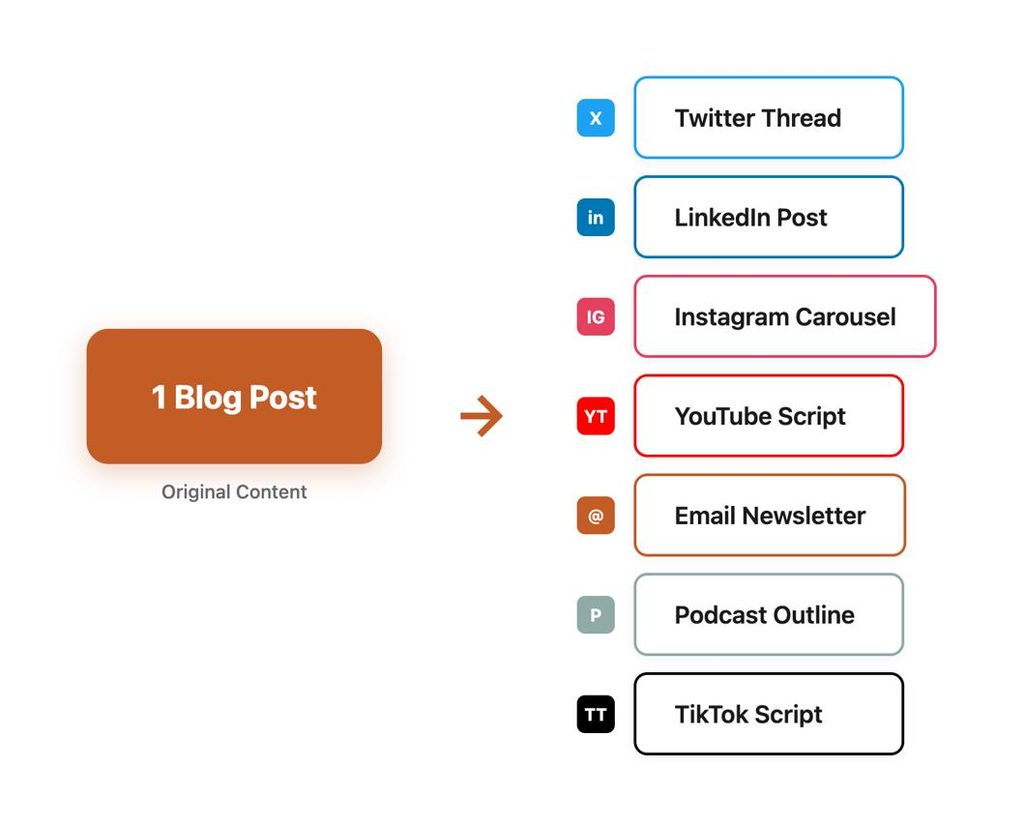
🚀 The Real Secret: Don’t Use AI to Replace Your Blog
Use it to multiply your effort.
Think about one article.
You write:
1 blog post
Then turn it into:
5 Instagram Reels
5 TikToks
1 Facebook post
1 Instagram carousel
1 YouTube Short
5 Pinterest-style graphics
1 email
Suddenly, one article isn’t one piece of content.
It’s a content engine.
And that’s the strategy I would use for AnbyMagazine.site.
🎯 Your Simple AI Blogging Formula
Remember this:
PROBLEM
“Writing blog posts takes hours.”
↓
CURIOSITY
“These 3 AI workflows can remove the most repetitive work.”
↓
VALUE
Show exactly how.
↓
BLOG
“15 Best AI Tools for Bloggers in 2026”
↓
SOCIAL
Create Reels + TikToks + carousels.
↓
CTA
“See the complete comparison at AnbyMagazine.site.”
↓
RESULT
Social discovery + website traffic + Google visibility
Final Takeaway
AI isn’t the reason a blog succeeds.
Useful information is.
AI simply gives you a faster way to research, organize, edit, design and distribute that information.
For AnbyMagazine.site, I would build around AI tools + blogging + SEO + social-media growth + small-business use cases rather than publishing generic AI news.
Your strongest starting keyword is:
Best AI Tools for Bloggers in 2026
And your strongest social hook is:
“Writing blog posts takes hours? Here are 3 ways AI can speed up your workflow.”
Use the social posts to create curiosity.
Use the website to provide the complete answer.
And use your next articles to build a connected AI-content cluster.
That combination is much stronger than trying to rank one isolated article. Google’s own guidance similarly emphasizes creating unique, satisfying content for people and ensuring your pages are accessible and provide a good page experience.
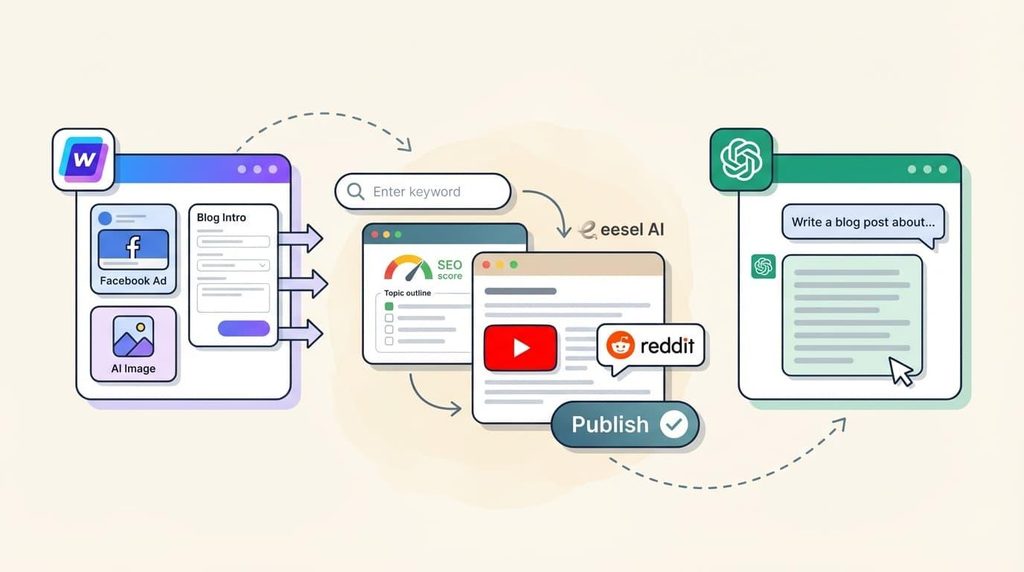
Primary Keyword: How to rank a new website on Google in 2026
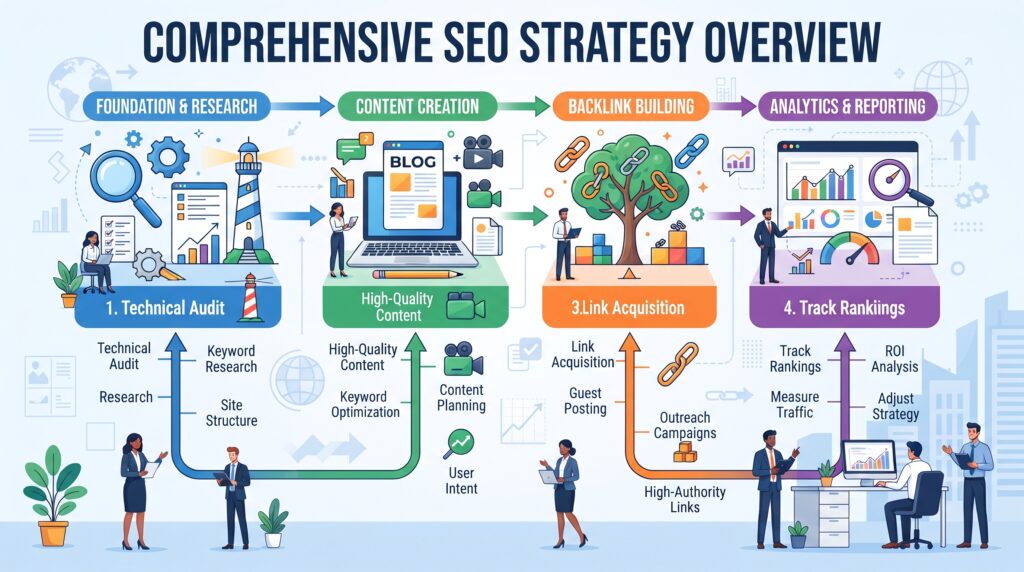
- Google SEO tips 2026
- on-page SEO checklist
- SEO for new websites
- how to increase organic traffic
- Google Search Console guide
- keyword research for beginners
- technical SEO basics
- website indexing
- internal linking strategy
- SEO content writing
Meta Title: How to Rank a New Website on Google in 2026 | Complete SEO Guide
Meta Description: Learn how to rank a new website on Google in 2026 with this step-by-step SEO guide. Discover keyword research, on-page SEO, technical SEO, content strategy, and proven tips to increase organic traffic.
Suggested URL:Anbymagazine.site/how-to-rank-a-new-website-on-google-in-2026
How to Rank a New Website on Google in 2026
Launching a new website is exciting, but getting it to appear on Google’s first page can be challenging. Many new websites struggle because they focus on publishing content without following a proper SEO strategy.
The good news is that Google continues to reward websites that create helpful, trustworthy, and user-focused content. Whether you’re starting a blog, business website, or online store, following the right SEO practices can significantly improve your rankings.
In this guide, you’ll learn how to rank a new website on Google in 2026 using proven SEO techniques that are suitable for beginners and experienced website owners alike.
Why New Websites Struggle to Rank
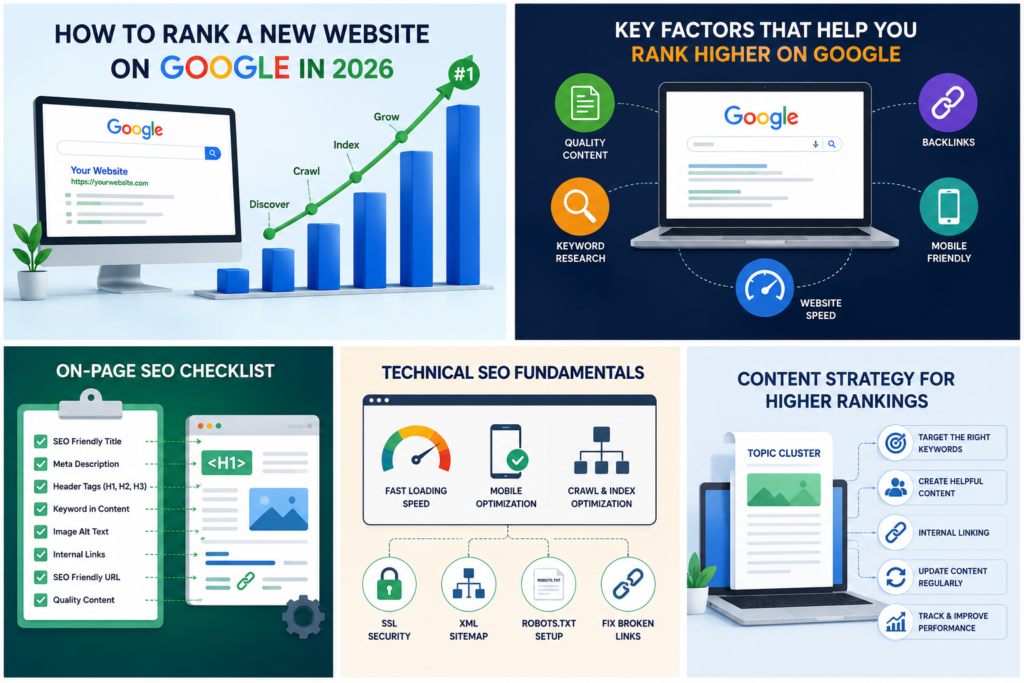
Google doesn’t immediately trust brand-new websites. Before your pages appear in search results, Google needs to:
- Discover your pages
- Crawl your content
- Understand your website
- Evaluate content quality
- Measure user experience
- Build trust over time
This process takes patience, but applying SEO best practices can speed it up.
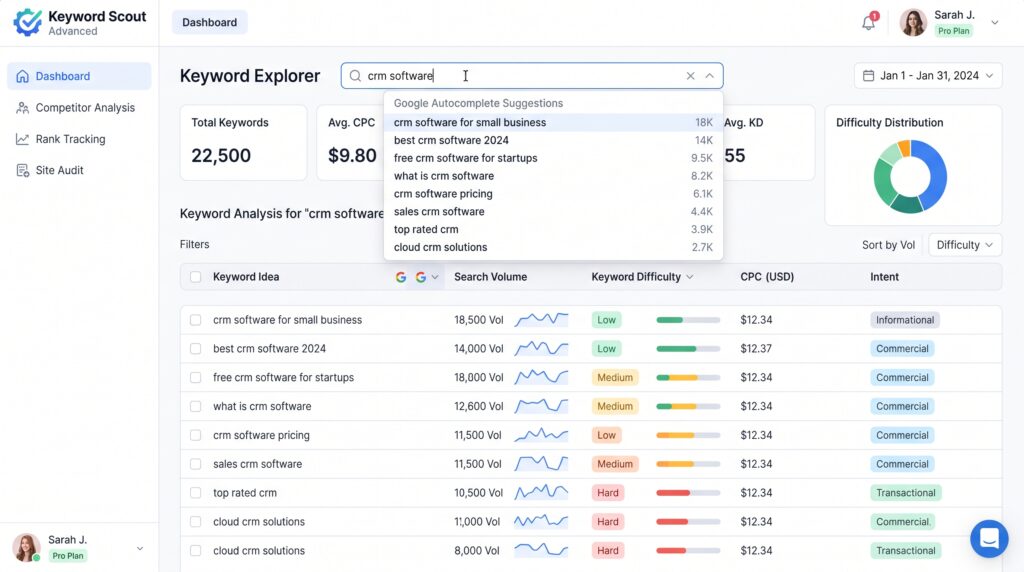
Step 1: Choose Low-Competition Keywords
One of the biggest mistakes beginners make is targeting highly competitive keywords.
Instead of writing about:
❌ SEO
Write about:
✅ How to rank a new website on Google in 2026
Long-tail keywords have:
- Less competition
- Higher conversion rates
- Better ranking opportunities
- More targeted visitors
Free Keyword Research Tools
- Google Keyword Planner
- Google Search Console
- Google Autocomplete
- Google Trends
- AnswerThePublic
Step 2: Create Helpful Content
Google now rewards content written for people instead of search engines.
Every blog post should answer questions such as:
- What is it?
- Why is it important?
- How does it work?
- What are the best practices?
- What mistakes should users avoid?
Aim for content between 1,500 and 2,500 words when the topic deserves that depth, and focus on accuracy rather than length alone.
Step 3: Write an SEO-Friendly Title
A good title should:
- Include your primary keyword
- Be clear and specific
- Encourage clicks
- Stay under about 60 characters when possible
Example:
How to Rank a New Website on Google in 2026 (Complete SEO Guide)
Step 4: Optimize Your Headings
Use headings correctly.
Example structure:
H1: How to Rank a New Website on Google in 2026
H2: Why New Websites Don’t Rank
H2: Keyword Research
H2: On-Page SEO
H2: Technical SEO
H2: Content Strategy
H2: FAQs
This makes your content easier for both users and search engines to understand.
Step 5: Improve On-Page SEO
Optimize every page by including:
- Primary keyword in the title
- Keyword in the first paragraph
- Keyword in one subheading where natural
- Image alt text
- Meta description
- SEO-friendly URL
- Internal links
- External references to authoritative sources when relevant
Avoid keyword stuffing.
Write naturally.
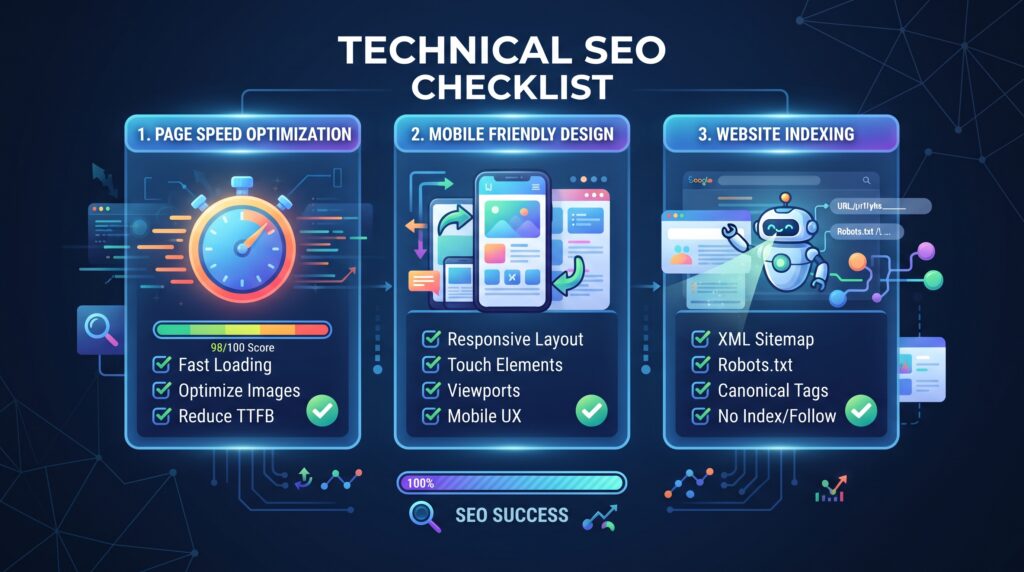
Step 6: Make Your Website Fast
Website speed directly affects user experience.
Improve speed by:
- Compressing images
- Using modern image formats
- Enabling browser caching
- Choosing reliable hosting
- Removing unnecessary plugins
- Using a Content Delivery Network (CDN) if appropriate
Fast websites reduce bounce rates and improve user satisfaction.
Step 7: Make Your Website Mobile-Friendly
Most searches now happen on mobile devices.
Your website should:
- Load quickly
- Use responsive design
- Have readable text
- Feature buttons that are easy to tap
- Avoid intrusive pop-ups
Step 8: Submit Your Website to Google
After publishing your content:
- Verify your site in Google Search Console.
- Submit your XML sitemap.
- Request indexing for important pages.
- Monitor indexing and search performance.
This helps Google discover your pages more efficiently.
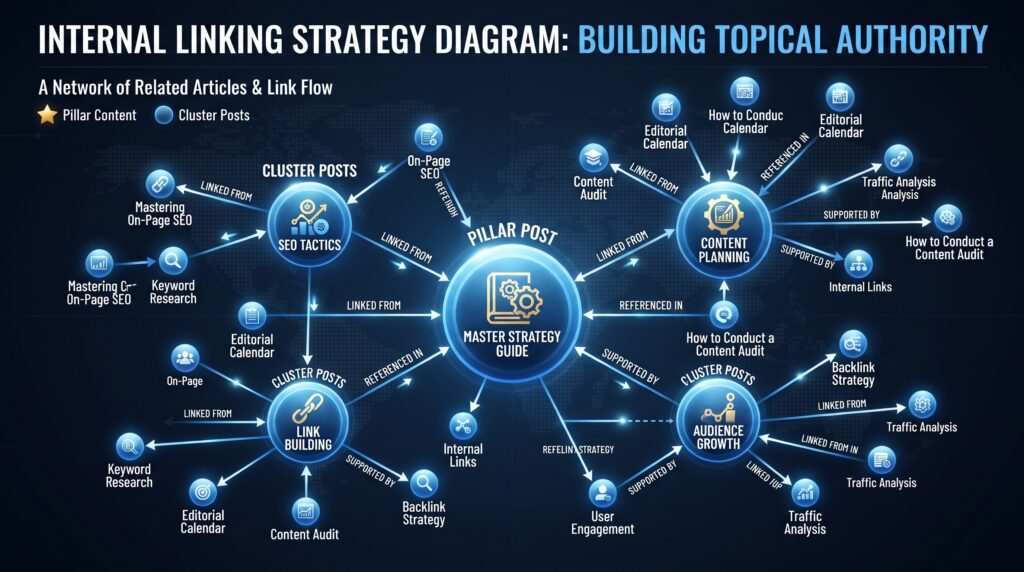
Step 9: Build Internal Links
Internal links help users navigate your website and help search engines understand your content.
Suggested Internal Links
When your site grows, link to related articles such as:
- Beginner’s On-Page SEO Checklist
- Technical SEO Guide for Beginners
- Best Free Keyword Research Tools
- How to Improve Website Speed
- How to Write SEO-Friendly Blog Posts
- Google Search Console Setup Guide
- Beginner’s Guide to Backlinks
Link naturally within your content where it benefits the reader.
Step 10: Earn High-Quality Backlinks
Quality backlinks remain an important ranking signal.
Ways to earn backlinks include:
- Writing useful, original content
- Guest posting on reputable websites
- Creating free tools or templates
- Publishing research or case studies
- Building relationships within your niche
Avoid buying backlinks or participating in link schemes.
Step 11: Update Your Content
SEO isn’t a one-time task.
Review and improve your articles regularly by:
- Updating statistics
- Refreshing screenshots
- Expanding sections
- Fixing broken links
- Improving readability
- Adding new FAQs
Fresh, accurate content is more valuable to readers.
Common SEO Mistakes
Avoid these common issues:
- Keyword stuffing
- Thin content
- Duplicate pages
- Slow website speed
- Missing meta descriptions
- Poor internal linking
- Ignoring mobile users
- Publishing without a content strategy
SEO Checklist for New Websites
✔ Target one primary long-tail keyword
✔ Add related keywords naturally
✔ Create helpful, original content
✔ Optimize titles and headings
✔ Compress images
✔ Add descriptive alt text
✔ Write compelling meta descriptions
✔ Build internal links
✔ Submit your sitemap
✔ Track performance in Google Search Console
✔ Update content regularly
Frequently Asked Questions:
1:How long does it take a new website to rank on Google?
Many new websites begin seeing rankings within a few months, but competitive topics can take significantly longer. Consistent publishing, technical optimization, and useful content improve your chances over time.
2:How many blog posts should I publish each month?
Publishing consistently matters more than hitting a specific number. For many new sites, aiming for 4–8 high-quality articles per month is a practical starting point if you can maintain quality.
3:Are backlinks still important in 2026?
Yes. High-quality backlinks from relevant, trustworthy websites continue to help establish credibility, but they work best alongside strong content and a technically sound website.
4:Does AI-generated content rank?
Google evaluates content based on its usefulness and quality, not simply on whether AI assisted in creating it. Review, fact-check, and improve any AI-assisted draft before publishing.
5:What is the most important Google ranking factor?
There is no single ranking factor. Helpful content, search intent, page experience, technical SEO, relevant backlinks, and overall site quality all contribute to rankings.
GOOD TO KNOW:
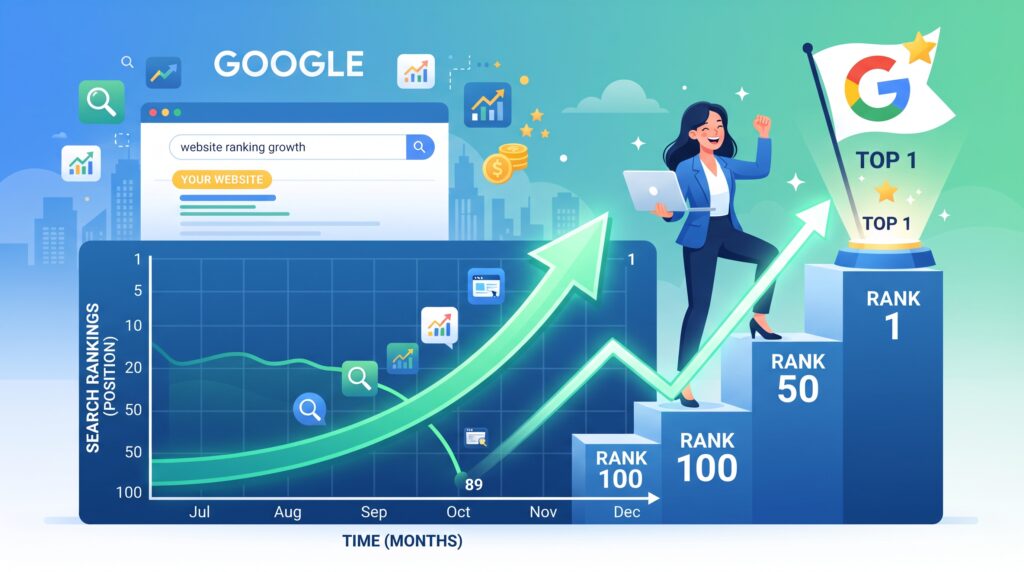
Ranking a new website on Google in 2026 requires consistency, patience, and a focus on helping users. Rather than chasing shortcuts, build a strong foundation with useful content, sound technical SEO, thoughtful internal linking, and a clear content strategy.
If you continue publishing articles that genuinely answer users’ questions and keep your website updated, you’ll be in a much better position to grow your organic traffic over time.
Related Articles (Internal Links)
- On-Page SEO Checklist for Beginners
- Best Free Keyword Research Tools in 2026
- Technical SEO Guide for Small Websites
- How to Speed Up a WordPress Website
- Google Search Console Setup Guide
- How to Find Low-Competition Keywords
- Beginner’s Guide to SEO Content Writing
- How to Increase Organic Traffic Without Paid Ads
Complete Guide to Starting a Profitable Online Business With Low Investment
The internet has completely changed the way people earn money. In 2026, starting an online business is easier, faster, and cheaper than ever before. You no longer need a large office, expensive equipment, or huge startup capital to build a successful business.
Thousands of beginners are now making money online by using simple digital skills, social media platforms, and smart business strategies.
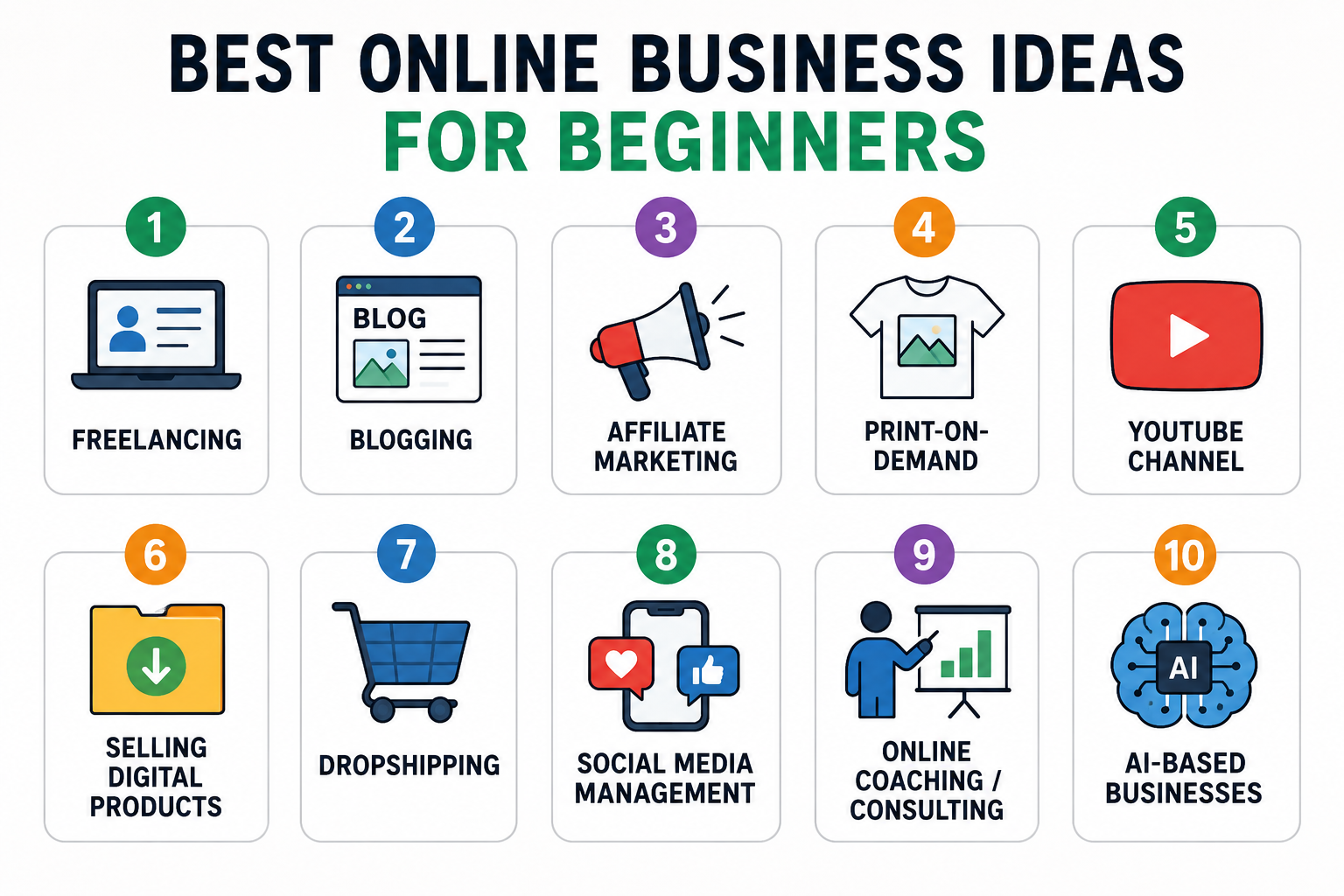
If you are looking for the best online business ideas for beginners, this detailed guide will help you discover profitable opportunities, understand how they work, and learn how to start step-by-step.
Whether you are a student, freelancer, stay-at-home parent, or someone looking for financial freedom, this article will help you choose the perfect online business idea for 2026.
Why Online Businesses Are Growing Fast in 2026
Online businesses are exploding because people now spend more time online than ever before.
Consumers buy products online, learn online, watch content online, and even work remotely. This creates endless opportunities for beginners who want to earn money from home.
Benefits of Starting an Online Business
Low Startup Costs
Many online businesses can start with almost no investment.
Work From Anywhere
You only need a laptop and internet connection.
Unlimited Income Potential
Unlike traditional jobs, online businesses can grow globally.
Flexible Schedule
You can work part-time or full-time.
Multiple Income Streams
You can combine different online income methods together.
How to Choose the Right Online Business
Before starting, ask yourself these questions:
- What skills do I already have?
- What topics interest me?
- Do I enjoy creating content?
- Do I want fast income or long-term passive income?
- How much time can I invest daily?
The best online business is one that matches your strengths and interests.
1. Freelancing – The Fastest Online Business for Beginners
Freelancing is one of the easiest and fastest ways to start making money online.
You offer a service to clients and get paid for your skills.
Popular Freelancing Services
- Content writing
- Graphic design
- Video editing
- Social media management
- SEO services
- Website development
- Virtual assistance
Why Freelancing Is Perfect for Beginners
Low Investment
You only need basic tools and internet.
Quick Income
You can start earning within weeks.
High Demand
Businesses constantly hire freelancers online.
How to Start Freelancing
Step 1: Learn One Skill
Focus on one skill instead of learning everything.
Step 2: Build a Portfolio
Create sample work to show clients.
Step 3: Join Freelance Platforms
Examples:
- Fiverr
- Upwork
- Freelancer
Step 4: Deliver Excellent Work
Good reviews help you grow faster.
2. Blogging – Build Long-Term Passive Income
Blogging remains one of the best online business models in 2026.
A blog can make money through:
- Ads
- Affiliate marketing
- Sponsored posts
- Digital products
Best Blog Niches for Beginners
Business & Finance
Very profitable niche.
Health & Fitness
Huge global audience.
Technology & AI
Growing rapidly in 2026.
Personal Development
Evergreen content.
Travel & Lifestyle
Great for social sharing.
How Bloggers Make Money
Google Ad Revenue
Earn money from website traffic.
Affiliate Marketing
Promote products and earn commissions.
Sponsored Content
Brands pay bloggers for promotion.
Selling Digital Products
E-books, templates, courses, and guides.
3. Affiliate Marketing – Earn Without Creating Products
Affiliate marketing is one of the most beginner-friendly online businesses.
You promote other companies’ products and earn a commission for every sale.
Why Affiliate Marketing Is Popular
No Inventory Needed
You don’t handle products.
Low Risk
Very small startup costs.
Passive Income Potential
Content can earn for years.
Best Platforms for Affiliate Marketing
- YouTube
- Blogs
- TikTok
Beginner Affiliate Marketing Strategy
Choose a Niche
Example:
- Fitness
- Tech gadgets
- Beauty
- Finance
Create Helpful Content
Teach people before selling.
Build Trust
Trust increases conversions.
4. Print-on-Demand Business
Print-on-demand lets you sell custom products without keeping inventory.
Products are printed only when customers order.
Popular Print-on-Demand Products
- T-shirts
- Hoodies
- Phone cases
- Mugs
- Posters
Why Beginners Love This Business
No Inventory
You don’t store products.
Creative Freedom
Design unique products.
Low Startup Cost
Perfect for beginners.
5. YouTube Channel Business
YouTube is still one of the most powerful online business platforms.
Creators make money from:
- Ads
- Sponsorships
- Affiliate marketing
- Merchandise
- Courses
Best YouTube Niches in 2026
AI & Technology
Huge trend.
Business & Side Hustles
Highly profitable audience.
Tutorials
People constantly search for solutions.
Motivation & Self-Improvement
High engagement niche.
How to Grow a YouTube Channel
Post Consistently
Upload regularly.
Create Valuable Content
Help solve problems.
Improve Thumbnails & Titles
First impressions matter.
Focus on Watch Time
Interesting videos rank higher.
6. Selling Digital Products
Digital products are one of the highest-profit online businesses.
You create once and sell repeatedly.
Examples of Digital Products
- E-books
- Canva templates
- Online courses
- AI prompts
- Resume templates
- Notion planners
Why Digital Products Are Powerful
No Shipping Costs
Everything is delivered online.
High Profit Margins
Very low ongoing expenses.
Passive Income Potential
Products can sell automatically.
7. Dropshipping Business
Dropshipping allows you to sell products without storing inventory.
When someone buys from your store, the supplier ships the product directly to the customer.
Advantages of Dropshipping
- Low startup cost
- Easy to scale
- Huge product variety
Dropshipping Tips for Beginners
Choose Trending Products
Research market demand carefully.
Create Strong Product Pages
Good descriptions increase sales.
Use Social Media Marketing
TikTok and Instagram work well.
8. Social Media Management Agency
Many businesses need help managing their social media accounts.
Services You Can Offer
This creates huge opportunities for beginners.
- Content creation
- Instagram management
- Facebook posting
- TikTok strategy
- Engagement growth
Why This Business Is Growing
Businesses know social media is important but many owners do not have time to manage it themselves.
9. Online Coaching or Consultint
If you have knowledge in a specific field, you can teach others online.
Popular Coaching Niches
- Fitness coaching
- Career coaching
- Business coaching
- Language teaching
- Productivity coaching
Best Platforms for Coaching
- Zoom
- YouTube
- Personal website
10. AI-Based Online Businesses
Artificial intelligence is creating new online business opportunities every day.
Beginners can use AI tools to work faster and smarter.
AI Business Ideas for 2026
AI Content Creation
Create blog posts and social media content.
AI Graphic Design Services
Use AI tools for branding and designs.
AI Video Editing
Fast-growing industry.
AI Automation Services
Help businesses automate tasks.
Step-by-Step Roadmap to Start Your Online Business
Step 1: Pick One Business Model
Avoid trying multiple businesses at once.
Step 2: Learn Basic Skills
Spend time learning:
- Marketing
- Content creation
- SEO
- Communication
Step 3: Build Your Online Presence
Create:
- Instagram page
- TikTok account
- Website or blog
- LinkedIn profile
Step 4: Create Valuable Content
Content attracts customers naturally.
Focus on:
- Tutorials
- Tips
- Problem-solving
- Educational posts
Step 5: Stay Consistent
Most people quit too early.
Online business success requires patience and consistency.
Common Mistakes Beginners Should Avoid
Spending Too Much Money Early
Start simple first.
Choosing Too Many Niches
Focus on one niche initially.
Ignoring Marketing
Even great products need promotion.
Expecting Overnight Success
Online businesses take time to grow.
Best Skills to Learn for Online Business Success
High-Income Skills for 2026
- Copywriting
- Video editing
- SEO
- Graphic design
- AI automation
- Social media marketing
These skills increase your income potential dramatically.
Starting an online business in 2026 is one of the smartest decisions you can make.
You do not need to be rich.
You do not need perfect skills.
You do not need years of experience.
What you truly need is:
- 1:A clear strategy
- 2:Consistent effort
- 3:Patience
- 4:Willingness to learn
5:Every successful entrepreneur started as a beginner.
The internet has created unlimited opportunities for people willing to take action.
Choose one idea, start small, improve daily, and build your future step by step.
15 Best AI Tools for Bloggers in 2026: Write Faster, Create Better Content & Grow Traffic
Fortnite Runners: Explore the New Map and Collect Every Sprite
How to Rank a New Website on Google in 2026: A Complete Beginner’s SEO Guide

Unique Social Media Template Ideas for Family Content: Stand Out with Meaningful Storytelling
Best AI Tools for Students in 2026: Study Smarter, Learn Faster, and Save Time

How to Start a Successful Online Business in 2026: Complete Step-by-Step Guide for Beginners
-
 Uncategorized4 months ago
Unique Social Media Template Ideas for Family Content: Stand Out with Meaningful Storytelling
-
Uncategorized4 months ago
Best AI Tools for Students in 2026: Study Smarter, Learn Faster, and Save Time
-
 Uncategorized4 months ago
How to Start a Successful Online Business in 2026: Complete Step-by-Step Guide for Beginners
-
Uncategorized3 months ago
Demystifying the AI Hardware Boom:- What Cerebras Systems’ $67B IPO Means for Developers…..
-
 Uncategorized4 months ago
Sustainable Living on a Budget: 25+ Practical Tips That Actually Save You Money
-
Uncategorized3 weeks ago
Fortnite Runners: Explore the New Map and Collect Every Sprite
-
Uncategorized3 months ago
AI vs Human Jobs: What Will Change by 2030? The Complete Future of Work Guide
-
BUSINESS2 weeks ago
15 Best AI Tools for Bloggers in 2026: Write Faster, Create Better Content & Grow Traffic